Once in a Lifetime Conditions Mean There May Never Be a Better Time to Remarket Vehicles
By Richard Mallek, Director of Business Development, FLD
Each quarter, FLD produces our quarterly White Metal Market Report, an in depth look at the factors affecting the wholesale used vehicle market.
And as in just about every industry, Covid has made predicting the future of the wholesale used vehicle – or really any used vehicle - market an exercise in futility. From shuttered businesses, to sheltering in place, the world is a much different place than any of us could have imagined just one short year ago.
Looking back, most of the companies and industries we work with were at a virtual standstill once the pandemic hit. And for the first few months, little happened as fleets took a wait and see attitude.
Then, something very surprising happened. Suddenly, the remarketing business kicked back into gear, and the second half of 2020 was a flurry of activity.

Word on the Street: A New Way to Remarket Vehicles
Traditional remarketing is looking more and more like a thing of the past, and word on the street is that there’s a new and better way. A way that’s built on human connection.
It’s Time to Talk about Privacy and License-Plate Readers (Again)
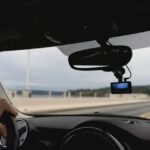
When you're driving on a public road, your license plate is public information. Cameras used as license plate readers (LPRs) can be mounted on stationary infrastructure like traffic lights or on things that move, like police cars or garbage trucks.
A discussion about massive data collection by cameras that can automatically read vehicle license plates has been going on for about a decade now. Most states do not have any explicit regulation on LPRs, which means their use was fairly wide open.
Law enforcement, unsurprisingly, is generally in favor of automatic LPRs. Chicago police said in 2020 that LPRs could help them solve more expressway shootings. In 2018, a Florida sheriff's office said it used LPRs to recover stolen cars and a person wanted for sex crimes in another state. In a more recent case, the Journal noted, LPRs were used to arrest "a number of suspected rioters" who attacked the U.S. Capitol on January 6.
Read the article at Car and Driver.
Finding the Silver Lining: A Fleet Manager’s Reflection on a Tough Year
It was a tough year for all of us, full of challenges and heartbreak, but you have to look for the silver lining.
A Customer Driven Mindset
What does it mean to have a customer driven mindset? In our latest podcast, Laura Jozwiak, senior VP of sales and customer relations at Wheels, Inc., talks with Ted Roberts about techniques we can all use to improve service to our customers.
From market and economic forecasts to the journey to zero emissions, there is a lot of reason for optimism in the work truck sector. This week, contributing editor Ed Pierce gives us extensive highlights from the recently concluded virtual Work Truck Week, WTW21.
Subrogation is an area where if it is not managed properly, a fleet can leave an awful lot of money on the table. To learn how it’s done, read How to Collect Every Last Subrogation Dollar for Your Company!
Drive Safety,
Janice Sutton
Editor in Chief