By Oliver Carpenter, VP Environmental Analytics, Risilience
April 1, 2026
The automotive industry’s shift to electric vehicles (EVs) is the most significant transformation in its history. Moving to replace internal combustion engines (ICE), the heart of the industry for over a century, with electric motors requires radical and unprecedented change to reshape supply chains, rethink production lines and transform business models.

Oliver Carpenter of Risilience
Mercedes-Benz, Stellantis, and Volvo have all revised their targets for an all-electric portfolio by 2030, conceding that regulatory and market conditions will dictate the pace of transition. Policy reversals by Trump’s government have forced US manufacturers, including Stellantis, Ford and GM, to write down EV investments. These strategic pivots highlight the financial risk of misjudging the timing and pace of the shift. Nevertheless, conviction in an all-electric endgame remains across the industry.
This rollback evidences the dependence of automakers on policy to underpin, via infrastructure development and incentives, a successful automotive transition. Global manufacturers are operating in a world defined by volatile geopolitics, dynamic trade constraints, fragmented regulation, evolving consumer demand, and the increasingly disruptive impacts of climate change.
 Global climate regulation to reduce emissions is a primary driver of the transition to EVs. Despite headwinds, rapid technology innovation, growing consumer adoption, and increasing price competitiveness is forcing the automotive industry to evolve. It is not a matter of if the industry transitions, but rather how to anticipate the rate of change across markets.
Automotive leaders face the critical challenge of allocating capital to large-scale investments with long-term returns while dealing with short-term financial demands and an increasingly volatile market. Adaptability will be decisive to successful transition: companies that understand what’s at stake and best navigate both risks and opportunities will emerge the winners in this new automotive landscape.
Climate risk and the new automotive supply chain
The EV supply chain is long, global, and complex. Companies must operate efficiently in new territories to procure critical components in the battery value chain. These supply chains are geographically concentrated and vulnerable to disruption, from both physical climate risks affecting supplier operations and increasing geopolitical tensions that result in trade tariffs and restrictions.
 A prime example is the industry’s dependence on graphite, a material essential for EV battery anodes. China, which processes over 90% of the world’s natural graphite, employs strict export controls and wields a strong influence on automakers’ license to operate.
Similarly, reserves of critical materials are concentrated in a handful of key regions: lithium in South America, cobalt in the Democratic Republic of Congo, copper in Chile and Peru, and rare earth elements in China. Many of these locations stand to bear the greatest physical impacts of climate change, which will increase the costs and availability of minerals.
These materials are also important ingredients for the low-carbon transition in many other sectors of the economy, and demand for renewable energy and green technologies, as well as the insatiable growth of AI, may further challenge the profitability of EVs.
 Electrification is also highly capital-intensive, compelling carmakers to pour resources into new manufacturing processes and support the rollout of charging infrastructure. Simultaneously, legacy assets tied to ICE vehicles pose a significant financial risk.
Such climate-related risks mean automakers face a delicate balancing act: aligning their ICE, hybrid, and EV strategies by deciding when to divest their ICE legacy and adopt EV-oriented business models.
These risks present a daunting challenge to manufacturers. In many cases, business transition requires upending long-established supplier networks and manufacturing systems. However, the opportunities to build resilient business models, find a competitive edge, and grow value present a compelling proposition to firms.
Scenario planning to assess policy change and market demand
Uncertainty is a hallmark of automotive’s transition to the low-carbon economy. The direction of travel is well understood, but the speed of travel is far less predictable. Deployment of electric vehicles is heavily dependent on policy frameworks that support the roll out of charging points and the wider electrification of the sector and provides a necessary catalyst.
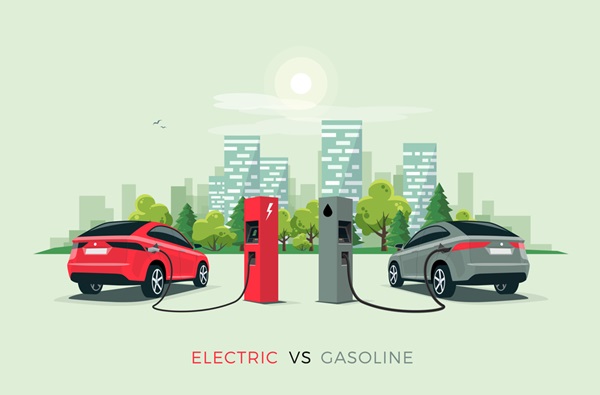 In some countries, there are set timescales around the phase-out of internal combustion engines. Elsewhere the policy landscape is less clear – the United States features a patchwork of regional regulations, with some states requiring the measurement and limitation of emissions, even if the federal policy does not. Despite the complexities of regulatory fragmentation and unpredictable policy shifts, globally competitive companies remain focused on the long-term strategic advantage of the EV prize.
Adoption rates vary from country to country resulting in a fragmented market. In some regions, EV adoption is accelerating; the Global EV Outlook 2025 confirms China, where industrial strategy supports EV, is leading the field with almost half of all cars sold in 2024 being electric, representing almost two-thirds of global sales. China’s demand has recently tapered with the reintroduction of an EV purchase tax, but exports are surging thanks to strong uptake in emerging markets. For example, nearly 40% of Vietnam’s new car sales are EVs from virtually zero in 2021. In Nepal, EVs made up 76% of new car sales in 2024.
 Europe is showing persistent growth: some 30% of new cars sold in the United Kingdom were electric vehicles, while Norway nears 100% EV adoption. These figures reveal the power of policy and incentives to influence the pace of adoption.
Consumers are also contributing to sector uncertainty. Research from McKinsey suggests that concerns around charging infrastructure, cost and driving range influence purchasing decisions in many markets. Market dynamics will likely continue to adjust as infrastructure and battery technology develops and consumer perceptions change. In many cases, the current slowdown in adoption reflects an interim correction rather than a reversal of the long-term trend. For car companies, the big challenge is to deal with all the unknowns – they must remain competitive without spending too much too soon.
Scenario analysis provides an essential tool to support decision-making in uncertain times. By financially quantifying and stress testing strategic decisions against different emission pathways, policy and market outcomes, companies can better understand the risks and opportunities that are material to the transition.
From climate risk to financial strategy
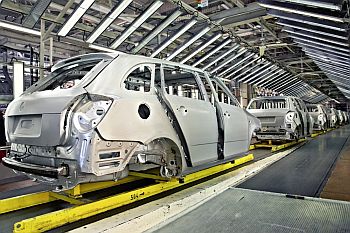 The automotive sector is characterized by investment decisions that have a lifespan of several decades. Factories, supply chains, and manufacturing facilities represent significant investments that will operate through periods of technological and regulatory upheaval.
Climate risk is integral to financial planning. Companies need to understand the potential business impact of disruptions to supply chain, policy developments, and wider macroeconomics dynamics to remain competitive. Decisions around the sourcing of batteries, the development of manufacturing capacity and entry into new markets have significant financial planning implications. Business leaders who understand that climate risk is material will be better placed to manage risk and build resilience.
Electric vehicles are coming, ready or not. Companies failing to integrate EVs into their business plans risk creating stranded assets, effectively ceding a podium place in future global markets to their forward-thinking competitors.
 Risilience is a climate and nature risk analytics company that helps global businesses transition to the low-carbon economy. See Risilience.com.