By Jillian Kossman, COO, IDScan.net
June 3, 2026
Each year, Memorial Day weekend demonstrates the sheer scale and complexity of modern travel in America, with projections from AAA estimating that more than 45 million Americans travel over the three-day holiday period. The volume of people moving from state to state and city to city places enormous operational pressure on airports, highways, rental agencies, dealerships, and mobility providers across the country.

Jillian Kossman, COO at IDScan.net
A lot of the media attention around the weekend focuses on congestion, delays, fuel prices, and travel demand. Away from the more tangible, visual impact of high volume of travel lies another trend that deserves greater attention: the growing role peak travel periods play in enabling identity fraud.
An analysis of more than 1.7 million ID verifications conducted across automotive and mobility businesses throughout North America revealed how large-scale travel events increasingly create ideal operating conditions for fraudsters targeting vehicle access, rentals, and automotive transactions.
Bad actors are using the distraction of peak travel periods, like Memorial Day, as opportunities created to commit fraud.
Peak pressure means peak opportunity
Since December 2025, automotive ID fraud attempts have risen by 20%, and across the sector, businesses are now experiencing average ID failure rates of 4.15%, with spikes exceeding 8% during high-pressure operational periods. When applied to the estimated 45 million people travelling during Memorial Day weekend, each percentage point equates to 450,000 fraud attempts or ID failures.
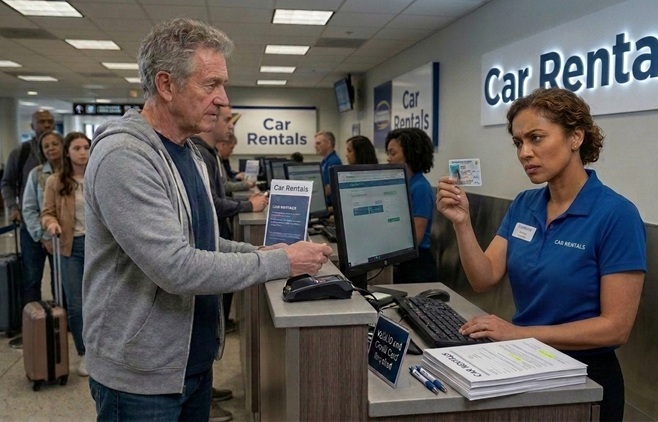
 Looking at what the data tells us in more detail, fraud attempts consistently spike during the busiest parts of the day, particularly between 8 am and 10 am, and again after 6 pm. These are the moments when staff are managing lines, processing customers quickly, handling shift transitions and trying to maintain smooth operations under significant pressure.
Imagine you’re a cashier at a supermarket and suddenly the volume of customers massively increases. Your ability to keep an eye out for shoplifting, vandalizing, or carrying out other illegal activities is impacted.
Holiday travel periods intensify all of those pressures simultaneously. Over Memorial Day weekend, businesses across the automotive and rental ecosystem faced the familiar challenge of balancing customer convenience and operational efficiency with safety and security. While the overwhelming majority of travelers are legitimate customers simply trying to reach their destinations, the large travel surges also create anonymity, unfamiliarity, and urgency, all of which are conditions that fraudsters look to exploit.
Why out-of-state IDs are becoming a growing vulnerability
One of the clearest warning signs the data on ID fraud during holiday seasons shows is the prevalence of out-of-state fraudulent identification, with nearly half of all fake IDs presented originating from outside the state in which the transaction occurred.
 During major travel weekends, that becomes especially difficult for frontline teams to manage as employees are presented with higher volume of identity documents that they are less familiar with and therefore less experienced in their ability to establish a legitimate ID from a fake, all while handling a surge in customer volume.
Fraudsters are clever and understand this dynamic well. They know that unfamiliar ID documents are harder to assess manually, particularly during busy operational windows, and look to take advantage of the multitude of distractions.
At the same time, the sophistication of fraudulent IDs continues to increase.
Advances in AI-assisted document creation and image manipulation are enabling counterfeit IDs to replicate security features, formatting, and visual design with increasing accuracy. It’s far from a criticism of workers being unable to spot a fake ID from a real ID, as the level of sophistication makes it all but impossible to do so with the naked eye. However, organized fraud rings are testing systems repeatedly, probing for operational weaknesses and locations where manual checks may be inconsistent, so new levels of protection must be considered.
The impact is greater than a single transaction
The automotive sector remains an attractive target for fraudsters because of the access to vehicles, which creates significant downstream value for criminals. Fraudulent rentals and dealership transactions can feed broader theft operations, insurance fraud schemes, illegal resales, and organized financial crime activity.
 What Memorial Day, and other holidays where activity volume spikes, highlight is that when it comes to protecting against ID fraud, operational pressure is now a proactive attack factor that fraudsters assess. Ensuring verification standards remain consistent when businesses are operating at maximum capacity is the challenge at stake.
For businesses that fall victim to fraud, the consequences extend beyond financial losses realized when the initial incident takes place, including not just vehicle losses, but insurance complications, administrative investigations, reputational damage, and operational disruption.
Fraud prevention must remain operationally consistent
Encouragingly, the data also shows that businesses investing in modern identity verification tools are seeing measurable results. For example, organizations using advanced ID scanning and authentication technology reduced ID-related fraud attempts by nearly 50% within the first 90 days of deployment.
 That reduction is driven by consistency and automation. Automated systems can validate security features, detect tampering, and identify suspicious anomalies far more reliably than manual visual checks alone, especially during high-volume trading periods.
But the broader lesson from Memorial Day is that fraud prevention cannot be treated as a secondary operational consideration during peak travel events.
As the summer travel season continues, organizations in the automotive industry should be reassessing how prepared they are for high-volume identity verification scenarios, and these assessments should include staffing strategies, escalation procedures, employee training, and the ability to maintain verification standards even during periods of increased demand.
The next test for operational resilience
 We’re heading into a time of year when travel volume will continue to spike. The summer months mean more people heading on holiday and tourists arriving from different countries and renting cars for road trips. This will act as a recurring stress test for operational resilience.
For automotive businesses, rental operators, and mobility providers, the ability to maintain secure and consistent identity verification processes during periods of increased traffic and the operational pressure that comes hand in hand is a differentiator against competitors. Identity fraud is becoming one of the clearest indicators of which businesses are prepared for that challenge, and which are not.