iPhone Maker Foxconn is Developing an Electric Car with Auto Startup Fisker
Electric-car maker Fisker said it will work with Apple supplier Foxconn to produce more than 250,000 vehicles a year beginning in late 2023, sending its shares up 18%.
The deal, codenamed "Project PEAR" (Personal Electric Automotive Revolution), is looking at markets globally, including North America, Europe, China and India, Fisker said.
Fisker Chief Executive Henrik Fisker said the new vehicle would be "futuristic" and "something completely different," as well as "affordable." It will launch in the fourth quarter of 2023, and is one of the four vehicles Fisker previously said it would introduce by 2025, he said. "We're not just going to make another electric car. We want to introduce things that probably will almost feel a little scary to some people."
Read the article at Business Insider.

Chevin Fleet Solutions Moves Up a Gear with a New Website and Brand Identity
Chevin Fleet Solutions Release
- Chevin has launched a new brand identity, website and hero film to mark its 30th year.
- Chevin’s new brand identity is reflective of the innovative approach it takes to fleet solutions, and its ambitions for the future.
- Chevin’s updated website is clear and easy-to-use, just like its software.
A new, dynamic brand identity. A smart, intuitive website. This is the future of Chevin Fleet Solutions.
This Is The Next USPS Mail Truck
The United States Postal Service said Tuesday that it had given Oshkosh Defense a contract to build its next mail truck. The new truck is significantly bigger than the one we’ve all seen on the road for decades, and it looks significantly different from the one we saw tested a couple of years ago.
The contract is for 10 years, part of the USPS’s plan to replace its fleet of 230,000 vehicles. I’m sure you’re wondering at this point whether these will be internal combustion or battery-electric designs. The answer is: both, though it’s not clear how many of each.
The new vehicles will also have a lot of advanced safety features that the current fleet doesn’t have. And, big news for carriers: They will have air-conditioning. (Most of today’s postal delivery trucks lack that amenity.)
Read the article at Jalopnik.
Porsche Claims Its Synthetic Fuel Could Make Combustion Engines as Clean as EVs
Instead of making some cool electric cars, Porsche is considering a different option: clean-burning synthetic fuel.
In an interview with Evo, Porsche’s Vice President Motorsport and GT cars, Dr. Frank Walliser, stated that the company has been envisioning something called eFuel, a synthetic fuel that would have the same carbon output as an electric car. Testing is supposed to start off in 2022, and it would be possible to use this fuel in any internal combustion car without having to go through the lengthy—and expensive—process of converting it.
It’s going to take a lot of time and money to produce even a little bit of these eFuels, but Porsche is confident that it’s going to be a good thing for the market—and the environment.
Read the article at Jalopnik.
A Deeper Look at the Wheels – OnStar Partnership’s Value for Fleets
By Ed Pierce, Contributing Editor
The recent announcement of a newly-formed partnership between Wheels and GM's OnStar Business Solutions promises to deliver a wide array of vehicle information with significant safety and operational benefits to the partners' fleet customers. OnStar-embedded hardware is available across most of the automaker's vehicle lineup.
Wheels senior product manager Sara Sweeney provided Fleet Management Weekly with an in-depth look at the benefits of the partnership for fleets: "Access to the OnStar data can help our customers tackle today's important business concerns. First, they can improve driver behavior and safety. Next, they can enhance fleet operational efficiency and customer service. Finally, they can gain insight into fleet electrification strategies," says Sweeney.
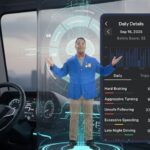
OnStar-connected data coming directly from the vehicle includes vehicle location, trip information, maintenance status, risk, or driver behavior indicators. Driving events, seatbelt usage, and speed are examples of the safety behavioral data points. There is also data collected on vehicle idling and hours driven. This data provides greater insight into how the vehicle is being used and how well it meets the driver and the company's needs.