
Fleet Management Weekly Staff
Although subrogation ensures fair compensation after an accident, too many fleets leave money on the table due to inexperience and the inordinate amount of time it takes to pursue owed compensation.
Yes, the collection process is complex. It is time-consuming and obstacle ridden. The amount of time it takes to investigate a claim fully, gather the proper recovery documentation, and negotiate a settlement places a heavy burden on already-busy fleet departments.
Subrogation Experts Deliver More Savings
The onerous work and length of negotiations for subrogation has given rise to subrogation specialists, and more fleet operations now rely on dedicated and skilled subrogation experts who know how to collect every dollar that is rightfully owed to the fleet.
Insurance providers may look to pay as little as possible even though, by law, at-fault parties owe 100% of the damages. Underinsured and uninsured parties may likely have trouble producing the funds to cover the damage. The recovery process in the face of these challenges can be arduous, but a dedicated subrogation team can recoup more dollars and substantiate its success with both cases and testimonials.
Prepare for Arbitration
Arbitration is a part of the subrogation process where having industry knowledge and experience is crucial. When going to arbitration, it is important to have the proper documentation and knowledge of the legal landscape, which varies from state to state.
If a busy fleet manager has to go into arbitration without proper prep and documentation, there’s a much greater likelihood of collecting only a portion of what the company is owed. Worse, unfamiliar fleet managers may not know enough to even enter arbitration. Since subrogation companies only collect a fee when a claim is settled, there’s no reason not to use a specialist.
Seek More Than Repair Cost
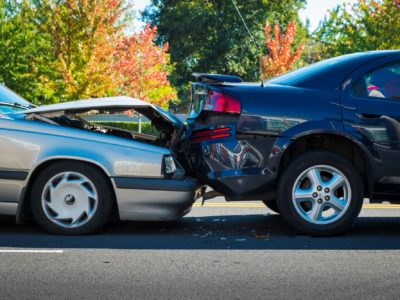
To increase the amount of money collected, experts subrogate not only the repair cost, but also reimbursement for loss of use, diminished value of the repaired vehicle, rental charges and, in some cases, loss of revenue or profit for the time the vehicle is out of service.
Subrogation experts describe five actions to the subrogation recovery process:
1. Evaluating the claims to pursue for recovery. This is the most crucial action in the entire process, consisting of careful evaluation of the kind of accident, the state in which it occurred, and the location of the damage.
2. Identifying the liable party. There are three possibilities: an insurance carrier, a self-insured company, or an uninsured driver. Normally, this step is relatively simple and straightforward, as long each driver obtains accurate driver and coverage information at the accident scene, and it’s relayed on a timely basis to the subrogation team.
By the way, it is possible to collect from uninsured drivers as long as they are employed and live in states that permit wage garnishment. In those cases, knowing which states and having the know-how and time to pursue it is rare among recovery non-professionals.
3. Preparing and sending the recovery demand. Printed recovery demands can be extremely lengthy. They include a claim letter that clearly states the amount being sought and the reasons, police reports, estimates and/or bills, and photographs. Accurate and complete documentation, along with a sound argument, are critical to recovering the optimal amount in a timely manner.
4. Negotiating the recovery amount. In most cases, there is initial disagreement over the demand. Typically, differences arise over the extent to which each driver was negligent, as well as whether the cost of repairs is reasonable. Differences over repair costs can arise not only over whether the most cost-effective methods and parts were used but over regional differences in parts and labor. An experienced subrogation agent will be aware of both in the latest trends in repairs and claims settlement by state.
5. Collecting the settled amount. Even after a recovery amount has been agreed upon, it still takes effort to receive timely payment. Multiple follow-up communications are often required so having a systematic way of tracking receipts is essential. Of course, agreement remains elusive and arbitration becomes necessary.
Advanced Subrogation ideas

Skilled adjusters: Experienced adjusters are fast and accurate in preparing repair estimates. They increase the chances of returning the vehicle to full operation at a fair price, reducing negotiation time, and minimizing costs for all.
Precise loss reporting. Effective subrogation begins the moment an accident is reported. Getting detailed loss information when the driver calls in is vital. A standard set of questions that will cover most situations can be scripted in advance with help from a subrogation expert. This assures that you have unbiased, detailed information to make a strong subrogation demand when the time comes.
Expert loss information review. Each loss report should be reviewed as soon as possible by an experienced loss review team to determine the responsible party and subrogation potential. Studies have found a correlation between the speed of this finding and the success of a subrogation demand.
Calculate all costs. To increase the amount of money collected, experts subrogate not only the repair cost, but also reimbursement for loss of use, diminished value of the repaired vehicle, rental charges and, in some cases, loss of revenue or profit for the time the vehicle is out of service.
Prompt notification of the responsible party: Speedy notice for the adverse party or insurance carrier of a subrogation claim that is likely to be filed establishes a professional tone for the claim process and is the first step in verifying coverage and achieving a desirable result.
Understand state law. Not all states recognize loss of revenue or profit as a recoverable expense, which is just one of the many complexities that make subrogation so difficult to manage in-house. Working with adjusters who have expertise in state-by-state case law is an important part of improving subrogation returns.
Shorten cycle time. A typical subrogation case averages 100 days from the time a subrogation demand is delivered to the time payment is made. In most cases, this can be shortened to about 53 days through case management that hits deadlines at the earliest moment allowed and discourages paperwork from sitting around.
Pursue even difficult claims. Not all claims are sure bets, and many are dropped when the longer cycle time and the cost of legal or other specialized counsel is considered. However, these tough claims can represent a significant portion of the total subrogation potential and choosing not to pursue them increases the total cost of fleet operations.
Thorough documentation: Creating a comprehensive documentation package streamlines the subrogation process and protects against legal disputes. Documentation should include photographs; witness information and statements from the accident scene; any police reports; photographs of repairs; and invoices of all repairs, storage, and expenses.
Questions to Ask a Potential Subrogation Partner
1. How and when are step involved in preparing the claim handled? Upfront time and costs add up quickly.
2. Are these costs for activities that are already part of your fleet’s accident management process? If not, the costs need to be added into the equation.
3. How is the subrogation partner compensated? Look for providers that only charge when money is recovered.
4. How does the provider differentiate itself in the areas of tools, processes, communications, experience, customer feedback, process customization, and results? Consider a weighted scorecard to assess vendors’ comparative value.
Our thanks to all of the subrogation providers, accident management companies, and many other fleet service providers for their contributions to this subrogation summary!