Trump’s Tariffs Pinch Fleet Budgets
Fleet Goes to Washington
NAFA’s annual meeting of its Government Affairs Committee took place last week in Washington, DC. One of the takeaways from guest presentations and conversations of members at the two-day conclave was the extent to which President Trump’s tariffs are negatively impacting fleets.
In Trump Tariffs Hurting Fleets, Jeopardizing Road Safety, we learn that tariffs on steel, aluminum and imported auto parts have resulted in significant hikes in replacement parts and upfitting.
In May, Trump proposed a 25% tariff on imported cars and parts which will either be implemented in November or postponed. The Center for Automotive Research estimates the proposed tariff could raise the average price of a car sold in the U.S. by as much as $4,400!
Speaking of government fleets, we love MSN's article about NYPD deputy commissioner Robert Martinez and his decision to add the tiny Fortwo smart car to his unique fleet.
Janice Sutton
Editor in Chief

Europe, Britain Carmakers: ‘No Deal’ Brexit Would be Catastrophic
Europe’s carmakers published a joint statement demanding that the European Union (EU) and Britain forsake a ‘no deal’ Brexit because the consequences would be catastrophic.
“The U.K.’s departure from the EU without a deal would trigger a seismic shift in trading conditions, with billions of euros of tariffs threatening to impact consumer choice and affordability on both sides of the Channel. The end of barrier-free trade could bring harmful disruption to the industry’s just-in-time operating mode," the statement said.
PSA Group CEO Carlos Tavares said, “With a no-deal (Brexit) you are going to destroy the lives of the next generation of people in the U.K. and that’s not fair, so a deal is a must.”
Read the article at Forbes
‘Busted!’ — Australian State Catching Texting Drivers
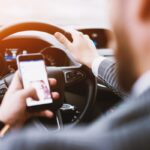
An Australian state is attempting to persuade people to put down their smartphones while driving by rolling out cameras to prosecute distracted motorists.
New South Wales Roads Minister Andrew Constance said Monday that Australia’s most populous state is the first jurisdiction in the world to use such technology to punish drivers distracted by social media, text messages or phone calls.
“There is no doubt drink-driving as far as I’m concerned is on a par with mobile phone use, and that’s why we want everyone to be aware that you’re going to get busted doing this anytime, anywhere,” Constance told Australian Broadcasting Corp.
Read the article at USA TODAY
Highway Sounds of the Future
As electric cars become more popular, engineers, driven by government regulators, are crafting the sounds that will define the highways of the future.
Two years ago, Nissan hired the studio Man Made Music for what seemed like a straightforward task: Design a sound that its quiet electric vehicles could play to announce themselves on the road.
The automaker wasn’t just splurging on a flashy feature. It was preparing for a federal regulation set to take effect next year that would require all hybrid and electric vehicles, which are quieter than their gas-guzzling ancestors, to emit noise at certain speeds for pedestrian safety
Read the article at The New York Times
Global Demand for EVs Accelerates
U.S. Department of Transportation Sec. Elaine Chao derided EVs as “cars that American consumers do not want to buy or drive.”
True, all forms of electrified vehicles – from conventional hybrids up to pure battery-electric models – account for barely 5% of the U.S. market, but those numbers have been surging. Demand for plug-based models alone rose 5%, to 200,194, during the first eight months of this year, despite the overall downturn in the American market.
According to industry data, global demand is accelerating at a far more rapid pace and, in several markets, EVs are beginning to dominate conventionally powered vehicles.
Read the article at The Detroit Bureau