By Ted Roberts, Publisher, Fleet Management Weekly
June 24, 2026

Gary Alexander, IMPROVLearning CEO
For decades, driver safety training has largely relied on traditional classroom presentations and video-based instruction. Yet despite years of educational efforts, collisions, claims, and insurance costs continue to challenge fleet operators.
IMPROVLearning believes the problem isn’t a lack of information—it’s a lack of engagement.
The company has spent the past 25 years developing an approach that combines humor, behavioral science, and artificial intelligence to create safety programs drivers actually remember and apply.
To learn more about IMPROVLearning and its distinctive approach to driver training, we spoke with Gary Alexander, the company’s CEO.
What is IMPROVLearning, and why does it matter to fleets?
“We use comedy and AI to save lives,” said Alexander.
According to Alexander, traditional safety programs often fail because they rely on the same methods used for decades.
“If traditional safety videos worked, fleets wouldn’t still be paying astronomical insurance premiums,” he said. “We’ve been pursuing a different approach for the past 20 years and have built a proven system.”
How did IMPROVLearning develop its approach?
Alexander began his career as a driving instructor before transitioning to classroom-based traffic safety education. He quickly realized that many learners weren’t engaged.
 The inspiration for IMPROVLearning came from an unlikely source—the famous Improv comedy clubs. “I realized people were falling asleep in safety classes, yet they would stand in line for hours to watch comedians,” Alexander explained. “So we asked ourselves, what if we combined those two worlds?”
The company’s first classes were taught at the Hollywood Improv, featuring professional comedians trained in traffic safety content. Over time, the company expanded beyond humor, incorporating behavioral science into its learning model.
Today, each program is developed with input from subject-matter experts, behavioral scientists, and comedy writers. “Our goal is to grab attention, influence behavior, and make the message memorable,” Alexander said.
Why is retention so important?
 Alexander believes most drivers already know the rules of safe driving. “The problem isn’t knowledge,” he said. “Everyone knows they should wear a seat belt and avoid using their phones. The challenge is changing behavior.”
The company focuses on short, repeated learning experiences designed to overcome what researchers call the “forgetting curve”—the tendency for people to lose much of what they learn within days. By delivering information in entertaining, memorable ways, IMPROVLearning aims to improve long-term retention and real-world driving habits.
What results have fleets experienced?
 According to Alexander, one immediate benefit is increased driver participation. “At least drivers don’t roll their eyes when they’re assigned another training course,” he joked. More importantly, the company cites independent studies conducted by the states of Florida and New York that measured the effectiveness of its programs.
Those studies found meaningful reductions in both traffic violations and collisions among participants. “We’re most proud of the reduction in crashes,” Alexander said. “That’s the ultimate measure.”
Fleet customers have also reported significant improvements in risky behaviors, such as distracted driving, and in seat belt compliance.
Can the training work for every type of fleet?
Alexander says the principles of defensive driving are universal. Whether someone operates a passenger vehicle, a service truck, or a Class 8 tractor, the fundamentals remain the same.
 To help drivers remember those principles, IMPROVLearning developed its SPIDER methodology:
- Scan
- Predict
- Identify
- Decide
- Execute
- Reflect
The framework teaches drivers to recognize potential hazards before they escalate into incidents. “I don’t care if you’re riding a tricycle or driving a semi-truck,” Alexander said. “The principles apply.”
What’s next for IMPROVLearning?
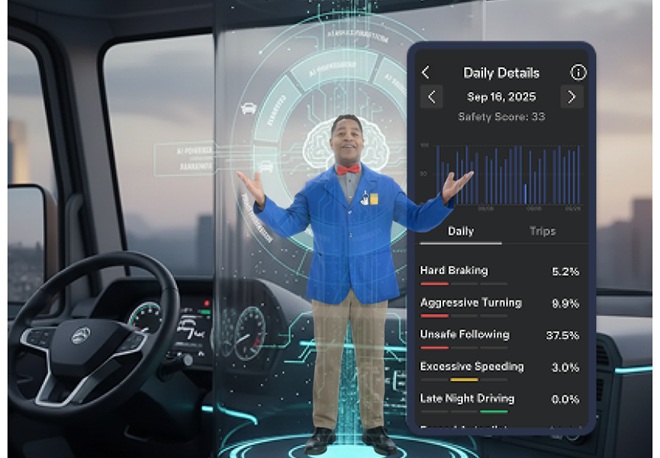
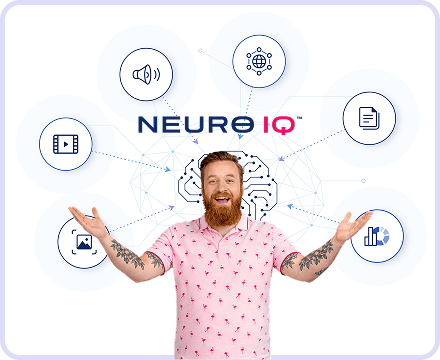 The company recently introduced a new platform, NEURO IQ, that combines telematics data with artificial intelligence to deliver personalized training programs. Rather than assigning the same content to every driver, NEURO IQ analyzes driving patterns to develop customized learning paths.
For example, repeated hard-braking events may indicate that a driver isn’t looking far enough ahead, rather than a problem with the driver’s braking technique. “We’re building behavioral profiles instead of reacting to individual events,” Alexander explained.
The system converts telematics data into actionable coaching recommendations, helping fleet managers focus on the areas where each driver needs the most improvement. “No two drivers receive the same training,” he said.
Utilizing Safety Data to Minimize Legal Risk
Besides saving lives and preventing property damage, there’s another major benefit. Fleet operators have invested billions in telematics and cameras, assuming that technology alone would protect them. It doesn’t. Actually, in courtrooms today it often works against them.
 Once risky driving data appears on your dashboard, you are legally considered to ‘know’ about it. A company aware of a problem driver and failing to address it faces significantly increased liability. Plaintiffs’ attorneys now subpoena months of telematics records to show that a fleet saw warning signs but did nothing.
Industry research indicates that when juries observe a documented pattern of violations tolerated by a company, plaintiffs almost always win. Telematics provided fleets with insights, but it never gave them the next steps. According to Alexander, “That’s where NEURO IQ steps in. In today’s legal environment, unused safety data isn’t just risk management; it’s pre-prepared evidence for the plaintiff.” NEURO IQ provides a pathway for fleets to avoid this pitfall.
What makes IMPROVLearning different?
 After nearly 25 years in business, Alexander says innovation remains central to the company’s culture. “I jokingly call us the city’s oldest startup.”
As fleets generate more telematics data, he believes the future of driver safety lies in transforming that information into individualized coaching and behavioral change. “Supervisors are drowning in data,” Alexander said. “Our job is to turn that data into meaningful training that helps prevent crashes before they happen.”
To find out how IMPROVLearning can help your fleet improve safety and minimize risk, click here.