Merchants Fleet Wins 2019 Impact Award from Innovation Leader Company
Innovation Leader, a fast-growing media and events company focused on helping the world’s largest companies build competitive advantage, recently awarded Merchants Fleet with a 2019 Impact Award.
The award recognized Merchants Fleet’s INNOV8 program, which offers training and resources to help employees innovate solutions by thinking and acting differently.
The Impact Awards honor companies that have achieved extraordinary outcomes related to their corporate innovation programs.

Electric Avenues: Sustainable Logistics in 2019
Affordable electric cars are everywhere, and they’re showing no signs of slowing down. If you’re thinking of making your business greener, stick around.
Despite having existed since the middle of the 19th century, electric cars have always played a distant second to their petrol and diesel-engined counterparts. Even as the world welcomed the 20th century, electric vehicles didn’t have the range or performance of combustion engine models. If you wanted to travel more than 50 or 60 miles in an electric car, you were out of luck. In 2019, however, things are different.
Eco-friendly cars are, undeniably, a great way to reduce your business’ carbon footprint, and almost every major car manufacturer has committed to electric and hybrid cars. With demand riding high – electric car sales are hitting double-digit growth rates, often above 50% year on year – we’re in the middle of an electric vehicle revolution.
Read the article at Discover
Seeing is Believing: Eye-Tracking Technology Could Help Make Driving Safer
University of Missouri News Bureau
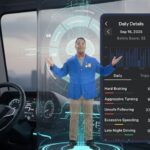
“Keep your eyes on the road.” With the recent advances in vehicle-assisted safety technology and in-car displays, this old adage has a new meaning, thanks to two new applications of eye-tracking technology developed by researchers at the University of Missouri.
Observing how someone’s eyes change — specifically the pupil — while they respond to an alert given by a vehicle collision avoidance warning could one day help scientists design safer systems.
“Prior to a crash, drivers can be easily distracted by an alert from a collision avoidance warning — a popular feature in new vehicles — and we feel this could be a growing problem in distraction-related vehicle crashes,” said Jung Hyup Kim, an assistant professor of industrial and manufacturing systems engineering in the MU College of Engineering.
Read the article at University of Missouri News Bureau.
Future Federal Fleet Gains at Risk Under New Decentralized Fleet Management Regime
By Adlore Chaudier Ph.D., CFFM, Associate Vice President, Federal Fleet Consulting Services, Mercury Associates
Last year, the Trump administration reversed a decades-old trend toward the centralization of federal agency fleet administration, a move that may prove to be problematic because of a lack of strategic expertise at the agency level to improve fleet operational efficiency and which flies in the face of proof that centralized fleet management is a better approach.
The clear trend in the industry has been and remains toward more rather than less consolidation. And to varying degrees, most public sector organizations have developed a centralized fleet management program.
Hyundai to Set Up $4-Billion Joint Venture to Develop Driverless Cars
Hyundai announced Monday it’s setting up a $4-billion autonomous-driving joint venture with Aptiv, the company spun off from what used to be the parts division of General Motors. The two companies will join forces to develop the technology needed to put robotaxis on the road by 2022.
Hyundai will be contributing $1.6 billion in cash and $400 million in services, R&D and intellectual property for its 50% share. Aptiv will hand over intellectual property and 700 employees, and the two promise they’ll have an autonomous-driving platform by 2022.
“We always viewed this as highly complex, as very challenging,” Kevin Clark, Aptiv’s CEO, said in an interview. “It’s an extremely complex solution that you need to develop, and the wider the use cases, the more complex it actually becomes.”
Read the article at The Washington Post.