NAFA’s Next Webinar: The Future of Fleets: A Sharing Economy Perspective
Presenter Adrian Albus will discuss the impact that the sharing economy will have on fleeting management as well as the work that Zipcar is doing.
Time: 12:00 PM - 1:00 PM EST
Date: Wednesday, November 15, 2017
There is a growing need for cost-efficient transportation for corporate and government entities. According to statistics from the Federal Highway Administration, government agencies in the United States alone operate approximately 3.7 million vehicles, and it costs some $21 billion yearly to maintain them. Efficient utilization and management of pooled vehicle fleets could take cars off the road and trim costs, helping both corporations and agencies to optimize spending and sustainability.
Objectives:
♦ An overview of fleet management across different sectors and to explore inefficiencies in the sector
♦ To find the intersection between fleet management and the sharing economy
♦ To explore innovative solutions in management and the future of the industry
Changing Lanes – Collision Free
Did you know you are three times more likely to be in an accident when changing lanes? Watch this video from Driving Dynamics for tips on how to avoid these dangers.
The Value of Digital Marketing
Today’s Fleet Marketing column from Ed Pierce is nicely done (as always), and speaks to something near and dear to my heart: Digital Marketing. One of Ed’s best pieces of advice: “Start with the undeniable ability to own the channel. In the digital world, you can have total control over direct interactions with your target audience. You can control both the timing and content of your messages.”
If smartly done content marketing that delivers ROI is in your plan for the new year, then I strongly suggest you make FMW a part of your mix. We have an audience of 18,000+ fleet professionals and will work to customize just the right package for your marketing objectives and your budget. You can learn more here, or email me for details.
Today’s issue also features a great Q&A with Bernie Kavanagh on how WEX is able to track EV Fuel Purchases, as well as a report from the Wheels Results+ Fleet Summit in Chicago, which I was lucky enough to attend a couple weeks back.
Ted Roberts
President
NVIDIA Says We’ll See Self-Driving Cars in Just Four Years
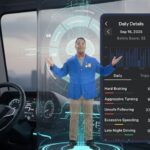
Jensen Huang, the CEO of NVIDIA predicts that the level of artificial intelligence required to make fully self-driving vehicles is four years away.
“It will take no more than four years to have fully autonomous cars on the road. How long it takes for the vast majority of cars on the road to become that, it really just depends,” said Huang said in front of media in Taipei.
NVIDIA the graphics-processing chipmaker-turned-automotive technology supplier, has seen its market value soar in recent years, as more carmakers like Tesla and Volvo use its proprietary sensors and chipsets as part of their advanced driving safety systems.
Read the original article at The Car Connection.
Rising Robot Numbers Driven by Auto Industry
Every worker at an auto supplier factory in Michigan was told to "go on - touch the robot", when the first of their newest, mechanical colleagues, known colloquially as co-bots arrived last year.
"I think people were scared to get close to it," says 67-year-old Phyllis Aslinger, an inspector on the line assembling door panels at the International Automotive Components' plant about halfway between Toledo and Cleveland on Lake Erie for nearly 28 years. A robot replaced her coworker, she says, "but I’m not afraid" of being rapped or rousted by the co-bot.
The Robotic Industries Association estimates that 250,000 robots are now in use in the U.S., the third highest in the world behind Japan and China.
Read more of the original article at Detroit Free Press.