UV Light — A Powerful Disinfectant to Reduce the Spread of COVID-19
By Darren Verebelyi, PhD, President, CoScientific
People committed to moving people and goods are exactly what the virus relies on. It does not care that we need to feed our families, distribute medical supplies, or take a group of children to school. It may be mindless, but its purpose is resolute: Find another host and replicate.
The virus is an enemy that degrades our standard of living and attacks innocent people. It will take our combined effort to defeat it. Our strategy needs to be a defense that stops infection while maintaining our economy and way of life.
Computer networks and the TSA protect people and resources with multiple layers of security because each one is not 100% effective. Imagine each layer is a slice of swiss cheese and by stacking multiple layers you can effectively cover the holes that are in each layer. I believe a strategy of layered safety is a methodology that should be embraced by the fleet community to combat COVID-19.
In our fight, manually cleaning surfaces, the use of masks, hand sanitizers, social distancing, and isolation all contribute to reducing the spread even though each is imperfect.

Some New Vehicle Technologies Risk Failing While Others Become ‘Must Have,’ J.D. Power Finds
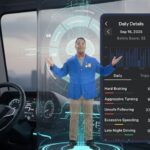
The J.D. Power 2020 U.S. Tech Experience Index (TXI) Study finds that automakers that innovate and are early to offer new technologies - so long as customers value them - stand to benefit most as those technologies enter the mainstream.
The TXI Study analyzes 34 technologies, which are divided into four categories: convenience; emerging automation; energy and sustainability; and infotainment and connectivity. Only technologies classified as advanced are award eligible.
The TXI Innovation Index measures how effectively each automotive brand brings these technologies to market, measured on a 1,000-point scale. Volvo ranks highest overall with an Innovation Index score of 617 and offers a high level of advanced technologies across its entire product lineup.
Read the article at J.D. Power.
What Contains 3 Times More Energy Than Gasoline, But Produces Zero CO2?
Last month, the EU set out a renewable hydrogen strategy, sketching a roadmap for how the world’s largest trading bloc intends to develop hydrogen production and usage through 2050.
The categories of hydrogen production are often split by color: brown, gray, blue and green. The dirtiest—brown and gray hydrogen, captured from coal and natural gas—create the most emissions and yet are the most widespread forms of hydrogen production, responsible for up to 95% of the H2 produced worldwide.
In the long-term, blue hydrogen is seen as an intermediate step towards the cleanest form of H2. Green hydrogen can be produced by separating hydrogen from water via electrolysis, though other technologies are emerging. When the electricity used to perform the process comes from renewable sources, green hydrogen becomes truly zero carbon.
Read the article is Forbes.
Reducing Costs Due to COVID-19? Here are Some Ideas on Where to Cut
By Ed Smith, President, Agile Fleet
Did you know that 80% of fleet managers expect budget reductions next year?
Fleets hit hard financially by the COVID-19 crisis may now be required to make changes that will reduce costs, increase social distancing and sanitation, and improve efficiency. The good news is that it may not be as difficult as you may think. Things like right-sizing, eliminating underused vehicles from the fleet, and sharing vehicles in a self-service motor pool (that can be operated remotely!) can all significantly reduce costs.
Did you know that the carrying cost of one passenger vehicle is between $3,500-$8,000 annually? If you can eliminate just 5 underused vehicles out of your fleet for example, you can save between $17,000 and $40,000 a year.
One of the best ways to reduce costs and (improve social distancing) is by implementing a shared vehicle fleet with a self-service motor pool system. Sharing vehicles, rather than allowing people to use assigned vehicles, not only reduces costs but offers many benefits to your employees.
California Court Ruling Gives Voters Last Word Over Uber, Lyft Worker Rights
A California appeals court ruling on Thursday avoided a shutdown of ride-hailing services Uber and Lyft in the state, effectively handing a decision over gig worker benefits and pay to voters in a November ballot measure.
Uber and Lyft say the vast majority of their drivers do not want to be employees, with some 80% working less than 20 hours per week. The companies say their flexible on-demand business model is not compatible with traditional employment law and advocate for what they call a “third way” between employment and contractor status.
Under the “third way” proposal outlined in the ballot measure, drivers would receive a health care stipend, a minimum wage, expense reimbursements as well as medical and disability coverage for injuries on the job. Labor groups reject the companies’ claims that current employment laws are not compatible with flexible work schedules and argue the companies should play by the same rules as other businesses.
Read the article at Reuters.