Drivers Let Their Focus Slip as They Get Used to Partial Automation
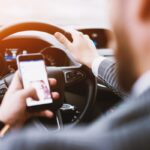
Drivers fidget with electronics and take both hands off the wheel more often as they develop trust in automated systems, new research from the Insurance Institute for Highway Safety and the Massachusetts Institute of Technology’s AgeLab shows.
To investigate how experience with automation affects driver disengagement, the researchers studied the driving behavior of 20 Massachusetts-based volunteers over a month’s time as they gained familiarity with advanced driver assistance features, examining how often they removed both hands from the steering wheel or took their attention away from the road to do things like use their cell phone or adjust the controls on the vehicle’s console.
Read the article at IIHS.

Tesla is Working on 620-Mile Range for Future Cars, Upcoming Semi
Range is still important to potential EV buyers. At least Tesla seems to thank so. During an interview as part of the European Battery Conference, Tesla CEO Elon Musk said that some of the vehicles in the company's current lineup could hit more than 430 miles of range and that the company is working on a 621-mile-range vehicle.
"We even have some under development that could do 1000 kilometers [621 miles]," Musk said during a video call about the company's plans which was focused on the Europe market. The CEO followed up that information by saying that the priority is on bringing down costs of these vehicles. That includes increasing energy density in packs, "so that everyone can afford to buy an electric car."
The CEO said that the long-term goal would be to bring down the battery pack's cost per kilowatt-hour. Experts believe that getting battery pack costs down to $100 per kWh would bring the cost of EVs down to gas-powered vehicles' levels. Tesla also builds its own powertrain, which could give it a leg up over automakers that use off-the-shelf components from suppliers.
Read the article at Car and Driver.
Plug-In Hybrids Under Attack by Environmentalists
Plug-in hybrids, or PHEVs, combine regular hybrid technology with a plug-in system like that found on pure battery electric vehicles. Automakers view PHEVs as the halfway point between ICE vehicles and EVs.
However, PHEVs still have combustion engines and thus produce C02 emissions. Automakers prefer not to acknowledge this but facts are facts, and now Reuters cites a report stating PHEVs produce more emissions than advertised.
A European campaign group calling itself Transport and Environment (T&E) has gathered the data and is now calling on governments to end PHEV subsidies and other tax breaks. T&E's data comes from tests conducted by Emissions Analytics who studied three PHEV SUVs - the BMW X5 Hybrid, Volvo XC60 Hybrid, and Mitsubishi Outlander PHEV. The results indicated all three emitted more C02 than claimed even under optimal driving conditions.
Read the article at Car Buzz.
NRDC: GM Abandons Attack on State Authority Over Clean Car Standards
WASHINGTON (Nov. 23, 2020) – In a letter to the leaders of NRDC and other environmental organizations, General Motors announced today that it would abandon its legal support for the Trump administration’s attempt to gut the authority of California and other states to set clean car standards.
The company also said it would work with the incoming Biden administration on “dramatically reducing vehicle emissions.”
The following is a statement from Luke Tonachel, director for clean cars and clean fuels at NRDC (Natural Resources Defense Council):
“This is just one step in this process. If GM is going to live up to its promise of being part of the solution to our climate crisis, it must support ambitious, federal and state clean car standards – standards that will put us on the path to make all new passenger vehicles pollution-free by 2035."
The Intersection of Fleet Safety and Driver Data Privacy
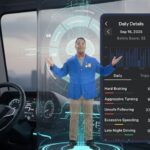
I think we’re all sensitive to the fragility of our own data privacy. In Addressing Privacy Concerns in Driver Risk Management, eDriving CEO Ed Dubens gives us a timely tutorial on data protection concerns that should be considered when organizations seek to implement a driver safety program.
Last month, we published the first in the series of Ed Pierce’s A Call to Action fleet marketing columns: The Importance of Storytellers, Substantiators, and Derailleurs in Today’s Changed B2B Market. In that column, Pierce talked to the importance of Storytelling as he answers the question: How are fleet service providers adapting to today's buying cycle?
This month, he explains the role of Substantiators. He says, “While stories provide a clear picture of the provider’s promise to a prospect, substantiators provide detailed, factual, or demonstrable proof of the promise. They give a customer a reason to believe, and they provide evidence that supports your claims.”
We welcome fleet veteran Donald Dunphy to our FMW team as contributing editor. He is a man of many talents and we are delighted to be working with him.
Janice Sutton
Editor in Chief