Amazon Delivery App Mentor Tracks Drivers’ Locations and Measures Their Performance
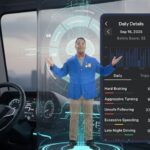
Amazon built its own in-house mobile app called Mentor that it uses to track the location and rate the performance of third-party delivery drivers.
The app tracks a driver’s location at all times and also generates a daily score that factors into performance evaluations.
Amazon bills the app as a tool for improving safety, but both drivers and privacy proponents worry the Mentor software is also a tool for surveillance of drivers and as another form of pressure applied on the workers to ensure they’re delivering packages as fast as possible.
Read the article at The Verge.

How Severe Cold Affects Your Car (and What to Do About It)
It's that time of year when it is so bitterly freezing that frigid temperatures can affect cars and trucks. Here are some of the problems and solutions offered by James Grant, owner of Right Choice Automotive Repair in Fairbanks, Alaska and the Car Care Council.
Driving an electric vehicle isn't the problem, but cold weather does impact an EV's efficiency and performance. Low temperatures slow the battery chemistry, which means you might not have as much acceleration or range as you think. That's an important consideration if you don't want to end up walking in the cold.
Winter is especially hard on batteries. If your car won't start in the extreme cold, one of the most likely problems is that the battery is dead.
Read the article at Car and Driver.
New Bill Could Revive EV Tax Credit For Tesla And GM, Include Used Cars
Once upon a time, you could snag a $7,500 federal tax credit on Teslas and electric General Motors cars. But ever since both automakers passed 200,000 EV sales in 2019 and 2020, respectively, that credit’s disappeared. It could return, however, thanks to a new bill.
Democratic leaders of the US House Ways and Means Subcommittee have backed the Growing Renewable Energy and Efficiency Now (GREEN) Act, introduced by Representative Mike Thompson (D-Calif.) that would make Tesla and GM’s vehicles eligible for IRS tax credits once again, and for the next several years.
Essentially, the bill would allow customers to claim up to $7,000 in credit with the purchase of a new electric car — a reduction of $500 compared to the earlier credit. That would now last up until the automaker in question surpasses 600,000 EVs sold. More critically for Tesla and GM, the law would also roll back their tallies to 200,000, meaning that any cars both companies sold after their first 200,000 would not count against their 600,000-car totals.
Read the article at MSN.
Tackling Brain Drain: Tips from a Recent Fleet Retiree
By Donald Dunphy, Contributing Editor
Recently, FMW put out a poll to fleet professionals who either have left the profession or plan to do so in the next five years.
We wanted to know what employers were doing to stem the loss of the knowledge "brain drain" within this decade.
The problem was already a concern, but with COVID-19 still leaving a heavy mark globally on business, operations are finding their ten-year-plans are coming ahead of schedule. Aside from lost jobs, some employees may find they cannot return to the work they once did. Others are moving ahead with earlier retirement.
Are organizations capturing the knowledge they need to continue fleet operations without unforced errors?
Moving Forward in 2021?
By Steve Saltzgiver, Director of Strategic Innovation, RTA Fleet Management Software
This past year we have been mired in a global pandemic that placed unforeseen restrictions -- which included a myriad of new safety and cleanliness standards – on fleet operations that may forever change the way a fleet runs.
However, most managers already had sound cleaning practices in place, and with a few enhancements required by regulators, the changes were relatively quick to implement.
That said, a longtime colleague asked me what I thought we should do after experiencing such a catastrophic year in 2020. So, where do we go from here? What questions should be asked?