By Steve Saltzgiver, Director of Strategic Innovation, RTA Fleet Management Software
This past year we have been mired in a global pandemic that placed unforeseen restrictions — which included a myriad of new safety and cleanliness standards – on fleet operations that may forever change the way a fleet runs. However, most managers already had sound cleaning practices in place, and with a few enhancements required by regulators, the changes were relatively quick to implement.
That said, a longtime colleague asked me what I thought we should do after experiencing such a catastrophic year in 2020. So, where do we go from here? What questions should be asked?
First, we need to continue to recognize that we are starting 2021 with the pandemic restrictions still in place while those vulnerable to the virus are vaccinated. Only then can we truly resume some sense of normalcy. Next, my response to the question is simple, as I believe each fleet manager just needs to refocus their efforts on basic blocking and tackling. Simply put, get back to executing known best practices required for operating a fleet of vehicles.
How to Set Expectations for 2021
First and foremost, each fleet organization must ensure its operation has the critical tools necessary to manage a fleet of vehicles and equipment. These can include:
• Demographics and detailed descriptions of each type of equipment.• Capacity to easily capture and catalog various types of transactional data (i.e., maintenance and repair, fuel gallons, parts and supplies used, technician labor time, vendor information, etc.) for each asset using industry-standard coding (e.g., SAE, VMRS, UPC, DTC, etc.).
• Robust querying abilities to organize data for in-depth analysis to produce standard metrics necessary to benchmark performance standards and understand data outliers.
• Wherewithal to produce detailed reporting output to provide management the ability to “act-on” the data analysis after it is completed.
Getting fleet data requires a structured fleet management information system (FMIS) with key integrations, and tools specifically engineered to capture real-time data input. A capable FMIS must include these high-level controls to accurately produce needed analysis and reporting to help manage all aspects of asset management. his is necessary to set continuous improvement objectives to stabilize fleet processes and expenses. A best practice for quality data analysis may look like the components found in Figure 1 below:
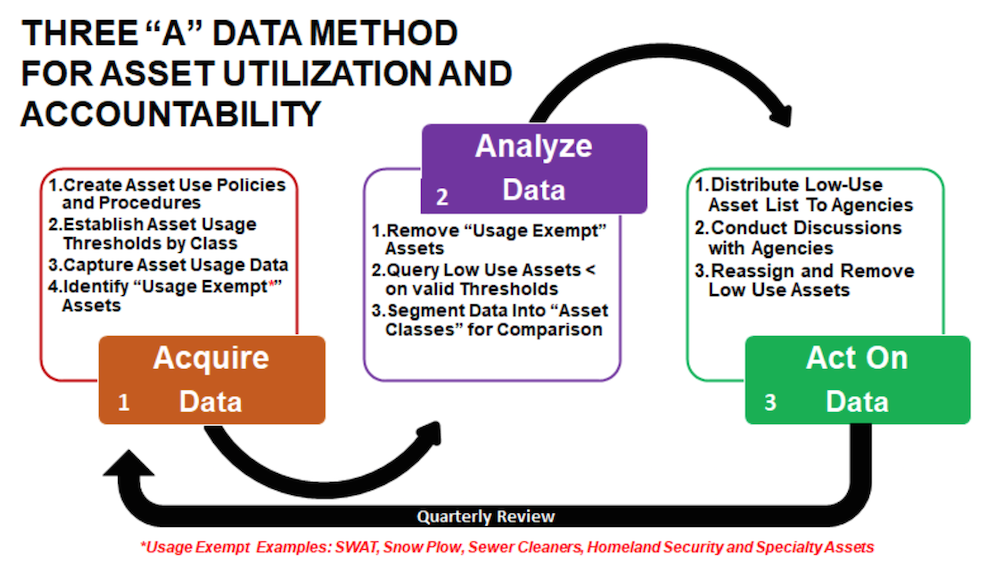 Figure 1 — Steps to Analyze Data for Accountability
Next, each manager’s focus in managing and maintaining a fleet of equipment is to have a sound preventative maintenance (PM) program in place. If this sounds like a no -brainer, it really is since every fleet should have been doing this all along. However, the opportunity to optimize the PM program is now the first place I would recommend the fleet team start in 2021. The adoption of COVID-19 safety and cleanliness standards must be formally integrated into the PM program routine. These new standards will undoubtedly add more technician labor time in performing each PM echelon (i.e., PMA, PMB, etc.). That means there is an opportunity to carefully process map each PM level using Lean Management principles to remove wasted motion and time. Using these Lean principles is a great exercise to get every member of the shop team involved. Of course, each technician has many ideas on how to best perform the walk-around routine and how to best reorganize the PM inspection form. Utilizing the technicians’ ideas instills ownership and enhances employee engagement and morale.
A PM program must include several components necessary to administer a sound program effectively and efficiently. At a minimum, these critical elements of a PM program should include: • PM handbook of policies, procedures, and detailed work instructions for employees administering and performing tasks.
• Separation of inspection versus repair-related tasks to optimize repair standards.
• Technician training requirements and standards to consistently execute the PMs.
• Multi-echelon and detailed PM task lists based on manufacturer guidelines and intervals.
• Integration of driver daily inspection reports (DVIRs), DOT roadside inspection reports and other defects discovered during vehicle inspections.
• Logical order of sequenced events to minimize steps and reduce costs.
• Dedicated bays, “part-kitting” and “specialty tools” to ensure resources are staged in advance to reduce PM labor time and minimize mistakes.
• Consistent quality control program to measure technician performance excellence.
• Standard repair times to manage and maintain consistent productivity standards.
• Established metrics to measure and benchmark performance to industry standards
Finally, review all existing shop PM procedures to ensure they are completely aligned with known industry best practices, and incorporate recommended virus prevention protections. As an example, Figure 2 includes several items that must be included in a prudent PM program.
 Figure 2- PM Program Components How to Work Through a Recovery Year
A wise manager understands that their most important resource is the people that perform the work. As such, managers must avoid taking their employees for granted, especially after experiencing a trying year like 2020. Many fleet employees could be suffering the aftereffects of the disease, or they might be fighting what has been coined as “pandemic fatigue”. Pandemic fatigue could range from feeling isolated during lockdowns to actual fatigue from the virus.
How to Boost Morale and Retain Your Staff
Morale and employee engagement programs are critical to moving forward in the upcoming year. In 2020, most fleet employees spent numerous hours ensuring safe and clean vehicles were available to drivers to perform their mission. This dedication during a stressful year undoubtedly has taken a toll on many fleet employees. As such, managers will need to gauge the current state of employee engagement, which will lead to the creation of innovative measures to strengthen the morale of all team members.
A simple employee appreciation celebration may suffice to recognize key employees for their accomplishments during 2020. Perhaps offering refresher training classes — not necessarily related to fleet skills, but to employees’ well-being — may be welcomed symbols of appreciation.
There are dozens of effective ways to strengthen and refresh employee morale, engagement, and attitudes that must be considered as we kick off 2021. The beginning of a fresh new year allows managers to work closely with their Human Resources team to explore potential opportunities. Moreover, 2021 presents managers with a great opportunity to review each employee’s career development plan to strengthen the person’s skillset and review his or her career path. This exercise should be taken together with the manager and each individual employee to allow staff members to have direct feedback into their path in the company. Using tools like talent assessments and aptitude testing can identify skill gaps which allow managers to target areas of weakness and opportunities to close the gap for each employee. Finalizing each employee’s career development objectives using these tools allows managers to plan for, and make, necessary budget adjustments to invest in vital employee training and educational programs.
Finally, make sure your team does not fall prey to the capricious whims of reducing the “2-Ts” during a challenging budget year. Generally, the first two budget casualties are travel and training, which can have severe impacts on continuing education and overall employee morale. Fight for your fleet employees to ensure this does not happen, and work with management to find other ways to reduce or stabilize fleet budget costs. A happy, well-adjusted staff based on improved morale and increased ownership and pride in their work can improve the overall health of the organization. This can translate into unseen cost savings.
How to Cope with Reduced Budgets in 2021
The challenges and sufferings faced in 2020 may make the likelihood of having to reduce your operational fleet budget inevitable this year. However, before looking for ways to reduce costs, look for other options. One tip is to review the internal charge-back rates customers are paying for the use of assets. Determine if rates can be adjusted downward based on historical expenses. If not, then determine how much rates should be increased to cover the estimated budget expenditures. Once the new budget baseline is determined, then managers can begin to brainstorm initiatives to reduce expenses.
The highest costs of managing a fleet are either people or assets, and each should be reviewed to truly reduce the budget dollars. A logical first step is to begin with analyzing each customer’s asset utilization trends, looking for underutilized assets. Next, determine if rates can be adjusted or if assets should simply be transferred or removed from the fleet. A targeted right-sizing initiative can generally find between 5-10% of assets as candidates for removal. With the average cost of an asset hovering between $6,000 and $10,000 annually, this initiative can yield significant budget savings. Should a fleet determine assets are to be removed, then it must analyze how this impacts its staff size. In my experience, a right-sizing initiative has rarely resulted in staff reductions, but it should always be reviewed.
Should We Retain Vehicles Longer?
The answer to this question is, “it depends”. Many fleets jump to the conclusion that they must extend life cycles on assets to reduce budget expenditures. Unfortunately, extending life cycles without the proper analysis may lead to devastating future cost implications. For example, a fleet may be able to push back the capital expense of purchasing a new asset for one year but doing that may increase the likelihood of an unplanned catastrophic failure of an asset that had reached its recommended life cycle.
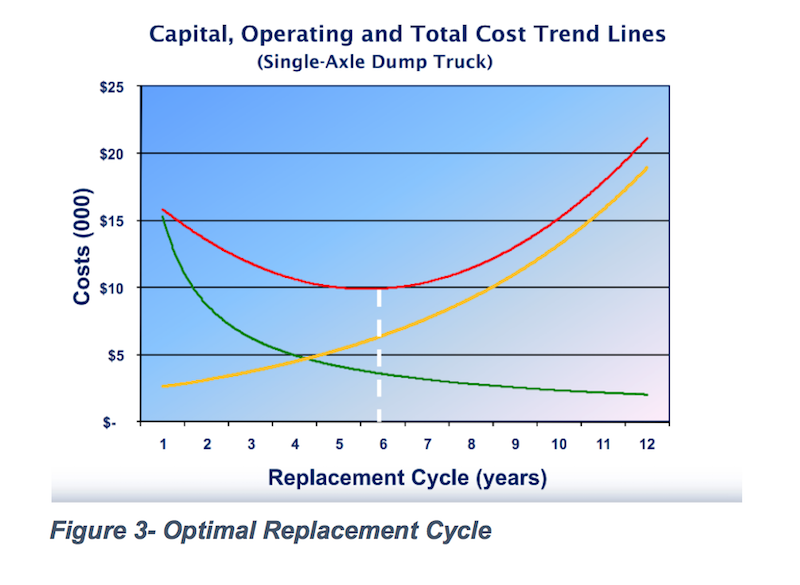
To properly consider extending the life cycle of a class of assets, a fleet must perform an Optimal Replacement Cycle Analysis, or ORCA. As the name may imply a species of whale, the impact of making the wrong decision on an asset’s life cycle could become a whale-sized problem — and a costly mistake. In a nutshell, an ORCA is calculated by comparing the total ownership and operating costs of a given asset class. Where the two cost lines intersect on the graph depicted in Figure 3 represents the optimal replacement cycle1.
 ¹ https://mercury-assoc.com/wp-content/upload/Fleet_Management_101Intro_to_Key_Principles_Concepts_Strategies_Techniques_Partt2_NTEA_MAR-2017.pdf
Once each class of ORCAs is calculated, management can then review the age of each vehicle within a class and decide which assets’ lives can be extended with the least amount of cost impact from a catastrophic failure – such as blowing an engine.
How to Work with Less and a Lower Budget
There are several ways to reduce your annual budget. Below are some of the most common ways to lower your fleet expenses. Consider using these during the 2021 budget year²:
1. Reduce the fleet size and recoup remarketing proceeds to add back to the budget.
2. Purchase smaller, more fuel-efficient vehicles, and replacement vehicles where possible.
3. Try to reduce unnecessary miles traveled by employees, where practical.
4. Lower fuel costs via increased purchase leverage and fraud/theft reduction.
5. Extend only the assets’ lives which have not reached their optimal lifecycle.
6. Focus on scheduled repairs, prevent unscheduled repairs costing 4X dollars.
7. Reduce oil costs using “oil life” gauge. Change oil at 10% remaining oil life.
8. Leverage telematic data to identify ways not previously used to reduce costs.
9. Focus on lowering accident-related costs. Accident costs are significant.
10. Lower overhead using Lean Management techniques for process optimization.
11. Maximize warranty recovery for newer assets and parts that fail prematurely.
12. Consider alternative transportation modes to meet employee travel needs.
Final thoughts
As we embrace 2021, it is important for each of us as fleet professionals to continue focusing on traditional programs which have proven to be successful before, as the past can be a good predictor of the future. Fleet management can be distilled into three buckets: people, process, and technology. Most every initiative that we encounter will fall into one of these categories.
So, it is important to continue researching, testing, and incorporating nascent technology as it emerges to make fleet management more effective and efficient. As a veteran who literally grew up in the fleet management industry, I have seen a lot of changes in the past 3-4 decades. However, it is my belief that we will see more change to fleet management in the next decade than we have witnessed previously. This means each of us as fleet professionals need to remain vigilant and committed to the principle of continuous education. In this fast-paced business environment we are experiencing, none of us fleet professionals can fall behind as changes are cast our way.
² https://mercury-assoc.com/wp-content/uploads/10-Ways-to-Reduce-Fleet-Costs-Article-Fleet-Financials.pdf