Global Microchip Shortage Hits Production of Ford F-150
A global shortage of the microchips used to power the automated and electronic features of vehicles has now hit production of Ford Motor Co.'s F-150 pickup truck. Both plants where F-150 is built, Dearborn Truck Plant and Kansas City Assembly Plant, will face production disruptions due to the shortage.
Detroit's automakers are not alone in feeling the chip crunch. The shortage has caused production disruptions for automakers around the world, including Toyota Motor Corp., Nissan Motor Corp., Daimler AG and Volkswagen AG.
Experts attribute the shortage to a complex set of factors, including the Trump administration's trade war with China, insufficient manufacturing capacity for the chips the automotive sector uses, and market forces tied to the pandemic that ultimately pitted the auto industry against consumer electronics makers that saw demand for their products grow during the pandemic.
Read the article at The Detroit News.
Amazon Delivery Vans Will Soon Have Always-On Surveillance Cameras: Report
Amazon plans to install always-on surveillance systems in its delivery vehicles which will monitor and record drivers' behavior as well as what's going on around the vehicle.
The system is called Driveri - pronounced "driver eye" - made by Californian company Netradyne. It uses artificial intelligence to analyze camera and sensor data and flag potentially dangerous situations. Amazon's stated goals are to reduce collisions and encourage safer driver behavior when making deliveries.
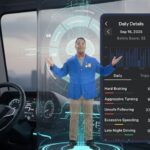
Driveri uses four high-definition cameras and artificial intelligence to flag problems while driving, uploading its footage to Amazon's servers for a safety team at the company to review. A driver can also manually upload footage at the press of a button in case of a dangerous situation or possible dispute, such as an inaccessible delivery location or prove that an incident wasn't the driver's fault.
Read the article at The Drive.
NHTSA Has a Lot of Catch-Up Ahead
NHTSA’s important regulatory oversight work stalled for four years with no director at the helm. Now, the Biden administration has a backlog of neglected tasks to dig through.
The lack of oversight on autonomous driving is perhaps the biggest oversight with Level 2 autonomy being the biggest safety challenge. The NHTSA has been pretty much hands-off when it comes to driver-assistance systems, specifically when it comes to Tesla’s misleadingly named Autopilot.
The inaction of NHTSA drew ire from another federal safety agency, the National Transportation Safety Board. The NTSB - which is most known for its investigations of plane and train incidents - blamed predictable abuse for a 2018 crash where a Tesla Model X crashed into a concrete divider.
Read the article at Jalopnik.
Ford, Google Deal Means Car Tech Upgrades for Drivers: Google Apps in the Vehicle
Google Cloud has been named Ford's provider for data, artificial intelligence and machine learning management. Millions of vehicles will be powered by Android with Google apps and services built in.
Team Upshift has been created to "drive the ongoing innovation" and "push the boundaries of Ford’s transformation, unlock personalized consumer experiences, and drive disruptive, data-driven opportunities."
Ford and Lincoln drivers will have access to voice technology, like Google Assistant, allowing them to keep their eyes on the road and hands on the wheel while multitasking. And Google Maps offers information on real-time traffic, automatic rerouting and lane guidance. With Google Play, drivers may access apps for listening to personalized music, podcasts and audiobooks in the vehicle.
Read the article at USA Today.
Happy Anniversary, eDriving!
Celebrating 25 Years of Digital Driver Risk Management
Having started out with just seven employees in Huddersfield, United Kingdom, in 1996, today eDriving employs over 120 “wizards” in nine offices around the world, helping organizations to successfully manage the risks associated with driving for work purposes.
To mark its Silver Jubilee, eDriving is proudly sharing some of its many milestones as it has helped shape the digitalization of driver risk management over the last quarter-century.