Car Theft on the Rise and People are Making it Easy for the Thieves
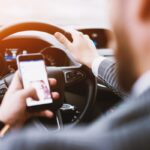
More vehicles were stolen in 2017 than in any single year since 2009 with the biggest reason being a combination of new technology and careless drivers.
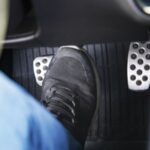
All thieves need to do is find a car where someone left the key inside, push the start button and hit the gas. With the proliferation of push-start buttons that can be activated as long as the key fob is inside the vehicle, it's easier than ever to drive off with someone else's car.
Read the article at USA Today.

Big Oil Companies are Looking at Charging Stations for Electric Vehicles
International oil companies as Shell and ExxonMobil are investigating a move into providing places where EV owners can plug in and juice up.
One reason gasoline-powered vehicles proliferated was the growth of fueling stations. If cars ran low on fuel, drivers could tank up.
Many EVs on the market have ranges far below 100 miles. That may be fine for most local driving, but longer trips are more demanding. When drivers see the gauge drop to zero and realize that they failed to plug the car in last night, they will need a place to recharge.
Read the article at Fortune.
Udelv’s Self-Driving Vans Will Deliver Walmart Groceries
Udelv, a startup that uses self-driving bright orange vans as delivery vehicles, announced that it will partner with Walmart on grocery delivery in 2019.
Udelv claims to have completed 1,200 deliveries and said it will deploy up to 100 vans in 2019.
Delivery services allow companies to deploy autonomous cars without having to convince members of the public to ride in them. That means companies can operate cars, and make money off them, regardless of the public's attitude toward the technology.
Read the article at MSN.
Fiat Chrysler Agrees to Nearly $800 Million Settlement Over Emissions Cheating Charges
Fiat Chrysler Automobiles has agreed to a settlement with U.S. regulators and other plaintiffs that could cost the automaker roughly $800 million to resolve allegations that it cheated on emissions tests.
“By concealing this software, Fiat Chrysler deceived regulators and violated environmental law,” Jesse Panuccio, principal deputy associate attorney general, told reporters in a briefing at the department’s headquarters.
“Fiat Chrysler’s conduct was serious and egregious. Its deception robbed the public of the clean air we work hard to protect and put law-abiding competitors at a disadvantage.”
Read the article at The Washington Post.
GM’s Luxury Brand Cadillac to Compete with Tesla
Cadillac will lead General Motors Co.’s march to 20 zero-emission vehicles by 2023, positioning the Detroit automaker's luxury brand to compete with electric carmaker Tesla Inc.
"EVs are expensive and technology-laden, especially with the increase in autonomous features, so the luxury segment is a natural coupling," Jeremy Acevedo, an automotive industry analyst for Edmunds, said in a Friday statement. "Tax rebates and subvented leases have masked this to a degree, but it looks like the next big steps in the EV segment are going to come from the luxury set."
Read the article at The Detroit News.