The Hidden Beneficiary Behind Trump’s Campaign to Rewrite American Car Emissions Rules
When the Trump administration laid out a plan this year that would eventually allow cars to emit more pollution, automakers, the obvious winners from the proposal, balked. The changes, they said, went too far even for them. But it turns out that there was a hidden beneficiary of the plan that was pushing for the changes all along: the nation’s oil industry.
In Congress, on Facebook and in statehouses nationwide, Marathon Petroleum, the country’s largest refiner, worked with powerful oil-industry groups and a conservative policy network financed by the billionaire industrialist Charles G. Koch to run a stealth campaign to roll back car emissions standards,a New York Times investigation has found.
Read the article at The New York Times.
The Evolving Transition Road to Autonomous Driving
The promise of convenient, lower cost and safer mobility has excited many. It’s not about what the future will look like, which will be a highly automated mobility system, but about the timeframe to get there.
There are major steps forward in transforming our mobility system from one that relies entirely on drivers, to a system dominated by riders. Limitations of the technology, risks inherent in removing drivers’ moment-to-moment touch from the steering wheel, cost implications of subsidizing automated mobility, and the need for a demonstrated safety benefit are among the concerns.
Read the article at Forbes.
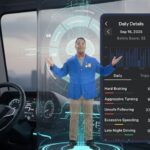
Facial Recognition and Fingerprint Verification Technology Speed Up Airport Rental Car Process
Hertz announced that it is going to lean on facial recognition and fingerprint verification technology to speed up the rental process at airports. The rental car giant struck a deal with biometric airport security company Clear to provide the technology.
The Clear biometric checkouts will allow renters to take off with their cars in just “30 seconds or less - a time savings of at least 75 percent,” according to Hertz. That means we’re not talking about an enormous amount of time savings. By that math, the current process takes two minutes.
Read the article at The Verge.
Building the Future Fleet: Are We There Yet?
When the future fleet arrives, will it be an improvement?
By Bernie Kavanagh
Sure, your vehicles might be autonomous, dutifully following all your rules on fueling, idling and safety without a coffee break. But what if they get hacked?
You like the lower emissions from your EV vehicles … even if you can’t figure out how much you’re spending on a charge, or how to do any of your usual fuel management reporting.
And of course we’ll all love swipeless, cardless payments -- until we find out fraudsters have caught up with the innovation.
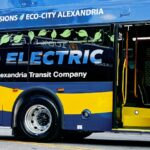
As Electric Fleet Grows, Utility Companies and Automakers Seek to Balance Demand
Automakers and utilities are working together to ensure a good supply of clean, inexpensive electricity, while developing strategies for charging that don’t overload circuits at peak periods.
“Done right, E.V.s present an enormous load growth opportunity for utilities,” said Britta Gross, director of advanced vehicle commercialization policy at G.M. “Charging can be managed in such a way that it is advantageous to the grid, such as when the wind is blowing or the sun is shining, and it can be done without building new power plants.”
Read the article at The New York Times.