NHTSA’s Serious Math Errors Made Tesla Autopilot Look Better
A small research and consulting firm called Quality Control Systems has produced a devastating critique of a 2017 National Highway Traffic Safety Administration report finding that Tesla's Autopilot reduced crashes by 40 percent.
The new analysis is coming out now—almost two years after the original report—because QCS had to sue NHTSA under the Freedom of Information Act to obtain the data underlying the agency's findings. In its report, QCS highlights flaws in NHTSA's methodology that are serious enough to completely discredit the 40 percent figure, which Tesla has cited multiple times over the last two years.
Read the article at Ars Technica.

Self-Driving Cars ‘See’ Through Fog and Dust With MIT’s New Technology
The lidar sensors used in most autonomous cars currently testing on public roads rely on infrared wavelengths, which are more likely to be disrupted in fog and dust situations.
MIT's experimental sensor reads radiation at sub-terahertz wavelengths, which are between microwave and infrared radiation on the electromagnetic spectrum. That means they can be detected through fog and dust. That's exactly the kind of sensor technology autonomous cars need in order to go mainstream.
Read the article at The Drive.
Wearing Your Fitness Trackers at Work Can Provide More Data to Your Boss Than You Know
The use of wrist-borne health and fitness monitors such as those made by Fitbit, Garmin and Apple, are an increasingly valuable source of workforce health intelligence for employers and insurance companies.
The volume of highly sensitive health data scooped up from individual employees is exploding, raising privacy concerns and adding a new dimension to the relationship of workers and their employers. Employees are giving up more insights about themselves than they realize.
Read the article at The Washington Post.
Vehicle Deaths Estimated at 40,000 for Third Straight Year
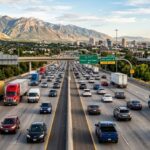
The U.S. has experienced three straight years of at least 40,000 roadway deaths, according to preliminary estimates by the National Safety Council. Last year’s estimated 40,000 deaths is 14% higher than four years ago.
Driver behavior is likely contributing to the numbers staying stubbornly high. The Council’s estimates do not reveal causation; however, 2017 final data show spikes in deaths among pedestrians, while distraction continues to be involved in 8% of crashes, and drowsy driving in an additional 2%.
Read the article at National Safety Council.
Q&A: 3Dtracking on Key Trends in Telematics
FMW recently had the opportunity to sit down and talk with Noam Cimand, General Manager of 3Dtracking, and came to understand more about trends in the telematics sector and what 3Dtracking has to offer.
What are the key trends currently moving the telematics sector forward?
On the one hand, the telematics sector can be seen as a base service, focused on elementary devices. On the other hand, we see a lot of demand for wireless connectivity in vehicles and increasing use of information and communication technology as well as increased pressure from governments for improved road safety.
In order to remain relevant in the market, a service provider must offer additional value to its customers by diversifying its telematics service offerings. This will create important new revenue generating opportunities and tangibly differentiate themselves from their competitors.