Your Car is Watching – Keep Your Eyes on the Road!
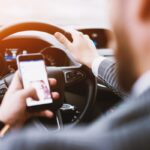
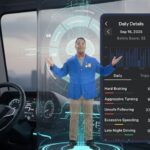
When fully autonomous vehicles begin cruising on public roads, they will have to be able to detect when people enter or exit a vehicle, who the person is, whether they have left anything behind in the car, and especially if a person has become disabled (because of intoxication or a medical emergency).
New safety concerns have prompted technology for cameras that recognize facial expressions, sensors that detect heart rates and software that assesses a driver’s state of awareness are increasingly viewed as part of an inevitable driving future. Eventually technology could be able to judge the emotional state of people in the car.
Read the article at The New York Times.

Merchants Fleet Launches Innovation Department
Merchants Fleet has launched its Innovation Department and hired Lisa Bonacci as its Director of Innovation.
The Innovation Department is dedicated to providing resources to further develop the skills, behaviors, and processes needed to continue to drive the best possible client experience and be an active partner in their success. The new department, led by Bonacci, expands the company’s resources dedicated to driving innovation in the fleet management space.
In her role, Bonacci will oversee and support a wide range of efforts taking place at Merchants Fleet to collect and nurture ideas, test and prototype technology and services, establish norms of collaboration, and give groups the tools for creative problem-solving.
Salvaged Telsa Reveals Unencrypted Crash Footage, Navigation Data, and More
Two security researchers and self-described “white hat hackers” found a trove of unencrypted location, camera, and other data on a wrecked Tesla Model 3
When they accessed the car’s computer, they found unencrypted data from “at least 17 different devices.
Newer vehicles are able to store a ton of both personal and vehicle data. Tesla’s cars tend to collect and store more vehicle data because they’re outfitted with more sensors. But as cars are outfitted with ever more sensors and computers, those that have been sold or crashed now contain far more granular data about an owner than what’s generated over a few days in a rental.
Read the article at The Verge.
First Responders Face Unfamiliar Challenges With Electric Vehicle Fires
Lithium-ion batteries inside electric vehicles, once ignited, can’t be put out with chemicals from a conventional extinguisher. The battery fires are susceptible to a self-destructive chain reaction known as thermal runaway, causing a feedback loop of rising temperatures.
Safety experts say the only way to extinguish a lithium-ion battery inside a car is with thousands of gallons of water, much more than what it takes to stop a fire in a typical gasoline engine. The other option is to just let it burn itself out.
Read the article at Bloomberg.
After Adding 5,304 Vehicles, De Blasio Says He Will Trim City Fleet
New York City Mayor De Blasio signed an order Thursday to trim the city’s vehicle fleet over the next two years — but the cut of 1,000 would barely put a dent in the 5,304 he has added since his election.
“We’re going to tell everyone, use fewer vehicles, use fewer cars when you can — we’re going to start with the public fleet. Today’s announcement is all about we’re really making sense of how many vehicles we need and not having a single vehicle more,” said De Blasio.
Read the article at New York Post.