New York Has Adopted Congestion Pricing. Will Other Clogged Cities Follow?
New York, the country’s largest city, will charge drivers to enter Manhattan’s most congested neighborhoods as a way to raise money for public transit and to persuade people to abandon their cars. The tolls are expected to start in 2021.
“New York’s use of congestion pricing could be a game-changer,” said Travis Brouwer, an assistant transportation director in Oregon, which has considered congestion pricing for traffic-jammed Portland. “If New York City can prove that congestion pricing can work and gain public acceptance, it could give cities like Portland a boost as we look to introduce pricing."
Read the article at The New York Times.

Strategic Consulting Designed for Corporate Fleets
Black River Fleet offers expert consulting that’s specifically designed for corporate fleets. Areas of expertise are backed up with over 20 years of experience, and include strategic fleet management, market tenders and fleet health checks.
Bleisure Travel Doesn’t Have To Make Expenses Complicated
By Mike Reinlein
According to the 2019 Travel Trends and Expectations Survey by WEX and Mastercard, the line between business and leisure travel continues to blur.
The survey, which polled over 1,500 U.S. travelers, shows that more than half (55%) of respondents who traveled for business in the past year extend their trips to include personal time.
While these trends create opportunities for employers to attract new talent, they also create challenges for corporate travel departments. With combined business and personal travel, managing expenses and reimbursements can get complicated.
If You Won’t Stop Speeding, Your Car Will Do It for You, E.U. Tells Drivers
The European Union plans to require speed-limiting and emergency braking technology in all new car models starting in 2022, along with dozens of other technical features to improve road safety.
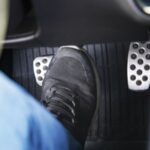
The speed-limiting technology, called intelligent speed assistance, uses video cameras, satellite location data or both to detect when drivers go over the speed limit, and curbs their ability to speed up further by restricting engine power. Drivers can override the system, depending on the model, by pressing harder on the gas pedal, for example.
Read the article at New York Post.
Understanding the Consequences of Driving Overloaded Vehicles
By Christopher Lyon, Director of Fleet Relations, NTEA – The Association for the Work Truck Industry
Fleet professionals are tasked with providing safe, reliable and compliant vehicles for their organization.
In many cases, fleet professionals that design these work trucks only have indirect control and/or input on how these vehicles are used after being placed in service. One of the biggest concerns is understanding the consequences of operating overloaded vehicles.
This includes drivability issues, reliability and maintenance concerns, and the regulatory impacts and liability risks associated with operating overloaded vehicles.