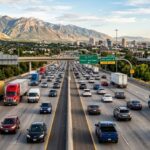
Automated Systems Need Stronger Safeguards To Keep Drivers Focused On The Road
Research has shown that the more sophisticated and reliable automation becomes, the harder it is for a driver to remain vigilant.
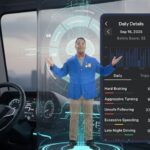
The systems that are currently available either assume the driver is paying attention when his or her hands are on the wheel or use a driver-facing camera to determine if the driver's head is oriented toward the road, but neither is foolproof.
The researchers recommend employing multiple monitoring methods. When the driver monitoring system detects that the driver's focus has wandered, that should trigger a series of escalating attention reminders: Visual, Audible, Physical Alerts and Pulse Braking. No manufacturer currently incorporates all these measures
Read the article at IIHS.

How Coronavirus Could Hit America’s 1.8 Million Truck Drivers
America's truck drivers are one of the largest groups at risk for not only catching coronavirus, but potentially spreading it to others because they are not able to work from home - "social distancing."
The job requires drivers to travel nationwide and come into contact with goods shipped from overseas, which could affect not only them, but those they come into contact with.
Truckers have to depend on truck-stop workers to ensure their shower booths are clean, trust fast-food employees to have scrupulous hygiene, and assume that the driver before them who sat in their seat didn't feel feverish. 38% of truck drivers do not have health insurance. Paid sick leave is also not a common benefit across many trucking jobs.
Read the article at MSN.
Coronavirus Will Change How We Shop, Travel and Work for Years
Every economic shock leaves a legacy, and the deadly coronavirus will be no different.
International manufacturers are being forced to rethink where to buy and produce their goods accelerating a shift after the U.S.- China trade war exposed the risks of relying on one source for components.
Workplaces have amped up options for teleworking and staggered shifts - ushering in a new era where work from home is an increasing part of people’s regular schedule.
The tourism sector is seeing the most drastic hit, with flights, cruises, hotels and the web of businesses who feed off the sector struggling. While tourists will no doubt be eager to explore the world and relax on a beach again, it may takes some time before the industry that hires about one in 10 people recovers.
Read the article at Bloomberg.
Is Car-Sharing a Solution for Grey Fleet Driver Risk?
By Mark Boada, Executive Editor
The so-called “mobility revolution” has a variety of dimensions: among the most prominent are connected vehicles, electric vehicles, autonomous vehicles, and ride-hailing as a more convenient alternative to hailing a taxi from a city sidewalk. By all accounts, the momentum for all of these continues to build.
One area that’s been faltering, at least in North America, is car-sharing. Over the last few months, a number of players in the business have scaled back their operations, leaving a handful of the biggest metropolitan areas in the U.S. and Canada, and a safe assumption is that the anticipated demand just hasn’t materialized, at least not yet.
FLD Updates WebAccess: An All-in-One Solution That Manages the Entire Remarketing Process from Any Smartphone, Tablet or Computer
Helping fleets save time, money and resources in one easy process that takes less than a week!
By Richard Mallek, Director of Sales
One of the things that most fleet professionals know about remarketing vehicles is that the entire process has a lot of moving parts.
To begin with, you have to consign your vehicle to a remarketing partner, and then wait for it to get recovered. After that, it often meanders through a weeks or months-long process that leaves you sitting ….and waiting …. and wondering ….
“How much will my vehicle sell for?
“How will it affect the total cost of ownership?”
“And - most importantly - when will I finally get paid!”
Wouldn’t it be great if there was a way to quickly and easily dispose of any vehicle or piece of equipment in one totally risk-free transaction that took less than a week?