When the World Stops Moving
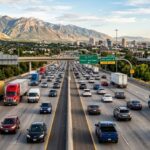
As the coronavirus pandemic tightens its grip around the world, city streets have transformed overnight - roads from Beirut to London to Atlanta have become arteries without blood.
With offices, schools, businesses and public institutions closing their doors, and households buttoning up under “shelter in place” orders, public transit systems are seeing ridership tank as millions of commuters follow work-from-home orders or choose options that involve less social contact.
But as the transportation leaders fight to keep networks and businesses intact in the teeth of this pandemic, the world is getting a striking glimpse, in certain ways, of the things that sustainability advocates have been imagining for years. Air and water pollution is clearing. It remains to be seen how many of the 1.35 million lives lost every year in car crashes around the world might be saved by coronavirus-related shutdowns.
Read the article at CityLab.

Short Behavioral-Based Driver Training Can Reduce Accidents
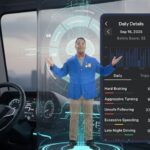
Driver Coach from SuperVision effectively delivers short, behavioral-based driver training that’s been shown to reduce accidents.
Fleets on the Front Line
As happens during most natural disasters, fleets are on the front line, and that’s never been more true than during this catastrophic global pandemic. New York City has been especially hard hit and we keep our friend Robert Martinez, deputy commissioner at NYPD, in our thoughts. We applaud all of the unsung heroes in our fleet family and keep in our hearts the amazing healthcare community who earn our gratitude every single day.
Even as managers deal with devastating circumstances, we’re also looking ahead to improve efficiencies and trim costs. Scott Conlon, managing director at Mercury Associates, offers us his thoughts on taming the complexity of managing a fleet operation in Reduce TCO, Improve Efficiency Through Fleet Standardization.
We are delighted to publish FMW’s exclusive interview with Edward Kulperger, Geotab’s senior vice president for Europe. In An Inside Look at Geotab, A Global Telematics Powerhouse, Kulperger discusses this fascinating company's fleet focus and agenda for the transition to electric vehicles. .
Drive safety and keep well!
Janice Sutton
Editor in Chief
GM, Ford Studying Ways to Produce Much-Needed Medical Gear
The nation’s two largest domestic automakers are exploring ways they could help offset the worsening shortages of ventilators and other medical supplies needed to cope with the worsening coronavirus pandemic.
Ford and General Motors say they are currently “exploring” ways to put their manufacturing expertise to work, much as they anchored America’s “Arsenal of Democracy” during World War II. Several sources TheDetroitBureau.com spoke to indicated that one approach could involve using 3D printing technology to create ventilators and other medical gear.
The subject came up during a call placed by GM CEO Mary Barra to the White House, explained spokeswoman Jeannine Ginivan. “She called to give (Larry Kudlow, director of the National Economic Council) news that we were going to suspend production and also said we wanted to help” in other ways.
Read the article at The Detroit Bureau.
Why Driver-Assist Systems Are Flawed
The Insurance Institute for Highway Safety (IIHS) has released new safety regulations for modern driver assistance systems and says that greater driver engagement should be a priority, the catch-22 being that ever-improving technologies cause drivers to become too uninvolved in the process.
"Unfortunately, the more sophisticated and reliable automation becomes, the more difficult it is for drivers to stay focused on what the vehicle is doing," claims David Harkey, president of the IIHS. "That's why systems should be designed to keep drivers actively engaged." Currently, the SAE International classification system for driver aids ranges from 0 (no automation at all) to 5 (a fully self-driving machine), but Level 2 is the maximum available in current vehicles.
The features fitted to modern cars include adaptive cruise control (the car controls the speed based on the distance from the vehicle in front), active lane changing, and lane keeping assist. The IIHS' concern is that these features should be designed to encourage constant attentiveness from the driver, even if the car can execute a lane change on its own.
Read the article at CarBuzz.