Merchants Fleet Expands Fleet Logistics Team
Merchants Fleet is expanding its fleet team offering services to logistics and delivery companies in response to a meteoric rise in ecommerce, and a national increased demand for delivery vehicles, as well as the associated services required to manage and maintain them.
Members of the newly expanded fleet team include Mike Gavio, Director, Logistics Sales; Sal Fier, Regional Sales Manager; and Pablo Ruiz, Regional Sales Manager.
“Our last mile and logistics clients are describing the period we are in as a ‘never-ending peak’ due to the drastic and sustained shift toward ecommerce as a result of the COVID-19 pandemic,” said John Cail, Senior Vice President of Mobility at Merchants Fleet. “We responded quickly to expand our fleet team focused on logistics companies to ensure our clients can scale their operations efficiently to keep goods moving to meet demand.”

The Future Of Car Buying: Omnichannel, Personalized, and Fun
In 2030, if you think about an omnichannel car-buying experience, it would likely mean starting on the website and exploring products but not necessarily asking, “do I want brand A or brand B?” It will be more like, “what is the feature set that I want?” So it might start with “what is your personality?”
There will be real customization in the dealership. So, for example, “do I still need this car seven days a week? Or do I need a bigger car on the weekend? Or do I need a bigger car in the winter when I want to go skiing?” And so it might be the purchase of the car, plus a package to have access to a different vehicle in the summer, the convertible for fall weekends, and in the winter the SUV to go in the mountains.
When we talk about price, it will be less and less the price for the entire vehicle. But it will be the price for maybe a month of usage of this car or for a certain mileage. There will be different packages—also in line with the shift to shared mobility, subscription services, and so on. There will be different ways of quoting a price, but it will be a fixed price.
Read the article at McKinsey & Company.
COVID-19 and Cars: Not A Good Medical Mix
President Donald Trump's ride outside Walter Reed National Military Medical Center can be a teachable moment for drivers and passengers, experts say. If you know or think you are sick, they say, you shouldn't get into a vehicle unless it's unavoidable.
Any person known to have or suspected of having COVID-19 should "isolate themselves at home except if he or she needs to get medical care," said Sonja Rasmussen, a professor of pediatrics and epidemiology at the University of Florida College of Medicine and College of Public Health and Health Professions.
If they have to travel in a vehicle to get care, the driver and passenger should wear masks and the person with COVID-19 should sit in the back seat, or further back if in a larger vehicle, such as a van, she says. "The car windows should be opened and the car vents should be used to bring in outside air."
Read the article at USA Today.
Bicycles And Buses Will Be Future’s Dominant Modes Of Urban Mobility, Predict 346 Transport Experts
The massive drop in motoring during COVID-19 national lockdowns has shown that change is possible, with an opportunity in the mobility sector towards a more sustainable, resilient, efficient and inclusive system.
The experts say that personal car use in the cities of the future won’t be sustainable, and policymakers will have to legislate to remove cars from the urban environment. If this occurs, the majority of the experts believe the full decarbonization of the transport sector is possible by mid-century.
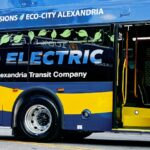
Buses and streetcars will also make a return and bicycling would be the second most important mode of transport, with 50% of the experts expecting cycling to be a dominant mode in most cities within 30 years. Walking would remain a key mode of transport for many people, believe the experts.
Read the article at Forbes.
Electric Vehicles Weather Summer Of Discontent: J.D. Power Exclusive
While it is true EV sales are down 15% year-to-date, according to the most recent analysis from the Valuation Services group at J.D. Power, the category actually outperformed internal combustion engine sales, which suffered a 23% decline so far this year.
This positive eight-percent difference points to a few key trends that are lifting the prospects of EVs over the mid-to-long-term horizons.
Taken together, the emergence of high-quality EV offerings from a variety of new players is combining with maturing infrastructure, rising consumer confidence and compelling tax incentives to lay the foundation for a very interesting 2021.
Read the article at Inside EVs.