Do You Own One Of The Most Stolen Vehicles In The U.S.?
According to the annual “Hot Wheels” list compiled by the National Insurance Crime Bureau (NICB) in Des Plaines, Ill., the full-size Ford F-150 is now the most-stolen vehicle in the U.S.
Rural areas and wide-open spaces, like Alabama, Alaska, and Arkansas tend to have more pickup trucks stolen than in more urban-oriented states like California, Connecticut, and Delaware, where sedans like the Honda Accord and Civic top the list.
Older high-volume vehicles are taken most often because they’re worth more than the sum of their parts. They’re typically driven off, or even towed away to a “chop shop” where they’re dismantled into components that can be passed off to unscrupulous vendors and sold to repair shops and consumers, often via the Internet. .
Read the article at Forbes.

Geotab Delivers Keyless Solution to Help Car Sharing Fleets
Geotab unveiled Geotab Keyless, one of the world’s first platform solutions that integrates a secured digital key function with a comprehensive and data-driven fleet management product.
“We are proud to be the first fully-featured telematics provider bringing a unique data-driven, keyless solution to the burgeoning car sharing market,” said Christopher Mendes, VP, Electric Vehicles at Geotab.
“Geotab Keyless is designed to enhance car sharing across every segment, including in-car delivery services in the future” added Mendes. “Keyless is particularly advantageous for electric vehicle (EV) car sharing fleets, as the solution can reliably manage vehicles’ state of charge (SOC), charging status and range remaining —a capability no other keyless hardware competitor possesses.”
Volvo Using Technology To Cut Down On Distracted Driving — Due To Technology
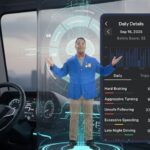
Distraction has become a fact of life, but Volvo’s safety research and behavioral science work suggests that when used correctly, modern technology inside the car can reduce distraction, boost road safety and help people to be better and more focused drivers.
Volvo Cars actively uses technology to combat the dangers of distraction and build some of the safest cars on the road. For example, its active safety systems with autobrake and steer assist are designed to be on guard to help drivers if they lose concentration or are distracted for a split second.
“Being able to control key features on your Volvo by voice allows you to keep your hands on the wheel and your eyes on the road,” said Malin Ekholm, head of the Volvo Cars Safety Center. “Active safety systems such as City Safety, Run-off Road Mitigation and Oncoming Lane Mitigation with steer assist can act as an extra pair of eyes watching over you.”
Read the article at The Detroit Bureau.
Google Assistant Driving Mode Appears To Be Coming To Android At Last
The Google Assistant Driving mode that the company first announced in 2019 has started appearing on some Android devices, XDA-Developers reported.
It’s not clear whether the rollout of this new mode is part of a test or will be coming for all users.
The voice prompt doesn’t appear to work yet even on devices enabled with the new mode, according to Android Police. To see if your device has Assistant Driving Mode, open Google Maps and from the navigation settings menu, and select “Google Assistant settings.” If it’s not enabled, you’ll be taken to the main Assistant settings section.
Read the article at The Verge.
Your Dog Needs To Buckle Up. Here’s Why
Many owners allow their fur babies to sit on their laps while they drive, or ride unrestrained in another part of the vehicle.
Listen up: if you have a 10-pound dog in the car and you’re traveling 50 mph, that tiny canine could exert a crushing 500 pounds of force on you or someone else in the vehicle if you crash.
A survey by AAA found that 84 percent of Americans have driven with their pet in the car. However, only 16 percent use any form of restraint. A chest-style harness in the back seat is a great way to keep medium to large dogs in place during long and short trips. Use seat belts to secure smaller dogs in portable pet carriers in the second or third row of your vehicle.
Read the article at The Drive.