Do You Know How Well Your Car Drives Itself?
Many people have no idea what their cars can and can't do. That confusion is clouding the debate about who is responsible when there's a crash.
The relatively recent introduction of semi-autonomous technology in cars has led to all sorts of documented bad behavior, from folks putting water bottles on their steering wheel to drivers letting Jesus take the wheel as they climb into another seat. The former can trick a car into thinking a driver's hands are where they should be; the latter is wildly dangerous.
As the industry puts more semi-autonomous tech into the hands of the American public, there is a growing need for better driver education and marketing standards that push automakers to clearly explain systems without overpromising. Solving these problems will only become more urgent as more advanced vehicles that actually can drive themselves under certain circumstances begin sharing the road and the marketplace with cars that have much less capability.
Read the article at Car and Driver.

How to Prepare a Business Case for the Adoption of Electric Fleet Vehicles
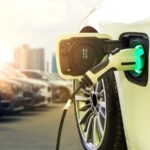
There are some great resources out there to help you prepare a business case for the adoption of electric vehicles, and in many states a great place to start is with your energy company.
How Driver Idling Behavior Modification Saves Fuel, Money and Reduces Emissions
By Ron Zima ADpPR and George Survant
Fleet managers face many challenges in improving their fleet’s fuel efficiency. Perhaps the most daunting of those challenges is idle reduction.
Based on numbers provided by Argonne National Laboratory, Americans and Canadians annually spend 6.6 Billion Gallons of gasoline and diesel idling for zero mileage and minimal if any benefit.
Further research reveals that Individual fleets across all sectors are spending an average of 40% of engine hours at idle when not in motion, generally not in traffic or performing a business function, such as running power take off (PTO) to run a bucket on a utility truck.
Unrequired idling is an enormous waste of money and contributes to an estimated 33 million tons of CO2 and other pollutants annually in a time when it is widely recognized that we must reduce emissions as quickly as possible. Electrification of our fleets can help, but it will take decades to completely convert all fleets.
Biden EV Target Sets Destination for Industry
President Joe Biden’s executive order signed last week establishes a nonbinding target for zero- emission vehicles - battery-electrics, plug-in hybrids and fuel cells - to make up half of all new passenger vehicles sold in 2030. It also directs the EPA and NHTSA to work on longer-term fuel economy and emissions standards for vehicles produced after the 2026 model year.
Major automakers including the Detroit 3, Toyota Motor North America and Volkswagen Group of America last week announced their support of Biden’s goal of reaching a 50 percent ZEV sales share in 2030, with executives from Ford Motor Co., General Motors, Stellantis and the UAW joining the president as he signed the executive order outside the White House.
The industry’s commitment, however, hinges on efforts from the administration and policymakers to put forth measures that foster greater consumer adoption EVs, including purchase incentives, charging infrastructure, R&D investments and incentives to boost domestic EV manufacturing and supply chains. “The biggest thing that’s happening here is there’s a realization, on the part of both labor and business now, that this is the future. We can’t sit by,” Biden said.
Read the article at The Car Gossip.
GM Teases Two New Zero-Emission Commercial Vehicles, a Truck and a Van
CEO Mary Barra said General Motors will introduce two new zero-emission vehicles for its commercial customers.
These will be a full-size battery-electric cargo van that will carry the Chevrolet name and a medium-duty truck that will be powered by both the company's Ultium electric batteries and its Hydrotec hydrogen fuel-cell technology.
These new EVs could replace or complement the current Express van and Silverado 4500HD
Earlier this year, GM launched a new business called BrightDrop and said it will offer electric delivery products for release later this year. The new electric vans will be designed for standard and "last mile" delivery solutions for commercial customers. Two vehicles have been announced so far.
Read the article at Car and Driver.