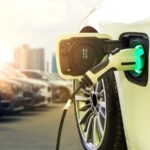
EV Range: Here’s What Can Hurt Your Electric Car’s Mileage
Before you sign on the dotted line for an electric vehicle, new or used, there are some things you should know so you're not surprised by a car's real world range.
Cold weather can substantially drop your EV's range by as much as 25% at freezing temperatures. The newer an EV you buy, the better it's likely to handle cold weather due to improvements in battery management technology, a good reason to assess a used EV carefully before deciding it's a bargain.
Battery age is the main reason a used EV may not be a bargain.
Read the article at CNET.

A New Study Breaks Down Vehicle Ownership Cost. Here’s How EVs Fared
A new study from the US Department of Energy’s (DOE) Argonne National Laboratory offers the most comprehensive results yet of the costs of owning and operating different types of vehicles and how costs vary by powertrain.
The study found that the maintenance costs of battery electric vehicles are 40% lower than ICE vehicles.
Overall, hybrid electric vehicles currently tend to be the lowest-cost powertrain. However, battery electric vehicles will reach cost parity as battery prices drop, and hydrogen-powered fuel-cell electric vehicles will reach cost parity with conventional vehicles as the price of hydrogen drops.
Read the article at Electrek.
Study Shows Hydrogen Made From Natural Gas Dirtier Than Burning the Natural Gas Directly
A new study reveals that the ways in which we manufacture hydrogen in the United States may actually be doing more damage to the environment than good.
The mining of natural gas creates significant quantities of carbon dioxide. The study also found that during the natural gas mining process as much as 3.5% of the gas leaks into the atmosphere, a consequential portion of which is methane. Methane can be, by some estimates, 86 times more potent than carbon dioxide in regards to the greenhouse effect.
While many energy companies are promoting hydrogen as an alternative fuel due to investments in natural gas mines, it would be far more friendly to Mother Earth if hydrogen was manufactured using solar or other forms of renewable energy.
Read the article at Autoblog.
According to Bloomberg, Sales of Fossil-Fuel Vehicles Have Already Peaked
A recent article in Bloomberg makes the bold assertion that sales of internal combustion engine (ICE) vehicles have already peaked, so the future of the global auto industry belongs to electric vehicles.
EVs may still be more expensive than fossils, but that won’t be the case for much longer. Bloomberg finds that, in Europe, battery EVs are approaching purchase-price parity with ICE vehicles.
On a total-cost-of-ownership basis, driving an EV is already cheaper than driving a comparable legacy vehicle.
Read the article at EVANNEX.
Want to Save Some Serious Cash? Start With Your Fleet Policies
By Ed Smith, President, Agile Fleet
What would you say if I told you that you could reduce fleet costs tomorrow?
You can. Did you know that having, communicating, and consistently enforcing policy can dramatically reduce fleet costs? I like to say that having good fleet policies is like having a money tree. If a cost-saving policy is communicated and enforced consistently, it will save you money every time.
Do you have a money tree?
Despite the obvious benefits and the relatively low cost of developing them, many fleets do not have written policies. If they do, they do not have systems in place to efficiently communicate and enforce them. Why? Seriously, why?
One great example of such a policy is limiting the use of personal vehicles for official use. There are many reasons it is not a good idea to have employees using personal vehicles for business purposes in most cases. Cost is chief among those reasons.