U-M Predicts Auto Industry to Help Protect Economy from Recession
Even as interest rates rise, strong demand for new vehicles could serve as the difference between a mild and a more serve recession in 2023, according to economists at the University of Michigan.
A potential beacon of hope comes in the form of the auto sector, where sales of new light vehicles might be ready to boost growth. Both sales and the pace of production have improved recently.
Rising inventory-to-sales ratios should help meet pent-up demand and could curb price inflation.
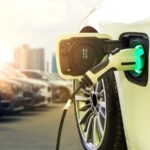
The researchers say the backlog of demand caused by supply chain shortages during the pandemic recovery could “prove to be a silver lining as the economy cools.” Couple that with the industry’s shift to electrification, which should support near-term labor demand with investments in assembly and battery production plants, the U-M forecast notes.

How BlackBerry Moved From Iconic Cellphones to Cybersecurity
In 2010, almost half of smartphone subscribers in the U.S. used BlackBerrys. After its phones fell out of favor with users, BlackBerry altered its course, taking some of the cornerstones of the business with it.
“After a few years, we realized that we would never get the volume up — and it’s a volume game,” said John Chen, CEO of BlackBerry. “And so we made that pivotal shift to a software-only company and focus on security and cyber and things of that sort.”
Its cybersecurity unit focuses on securing things such as smartphone applications and mobile banking websites.
Winter Tires Make ‘Unimaginable’ Difference — But Only Fraction of Drivers Use Them
Despite the benefits, only a fraction of U.S. drivers use winter tires. They account for only about 2.1% of replacement tire sales. That’s partly because of the cost, partly because most people have no idea how much better they perform.
The difference in steering, accelerating and braking is enough that drivers in many parts of the world wouldn’t consider trusting the same tires on a sunny, 90-degree Fahrenheit day and a damp, 40-degree one, much less in an actual winter storm.
Winter tires, sometimes called snow tires, have different tread patterns. Like an iceberg, though, 90% of the substance is hidden under the surface. Winter tires are made of rubber compounds created to improve traction at low temperatures.
Winter Is Back, but Don’t Idle Your Car
As the weather gets colder across the U.S., more people are likely letting their car "warm up" for a few minutes before they get in and drive. It doesn't make sense from a technological standpoint, and it may be illegal where you live.
The average American thought a car should idle for at least five minutes when it's below freezing out. A modern car heats up in about 30 seconds once you start moving, making a five-minute warmup really just an exercise in wasting emissions.
Most laws about idling refer to commercial, diesel-powered vehicles. In general, though, the places where it's illegal to idle a vehicle only come into effect after around five minutes. One exception is New York City, where the limit is three minutes.
eDriving Integrates Greater Than’s EcoScore Into Mentor Digital Driver Safety Application
eDriving, a Solera company and leading global provider of digital driver risk management solutions, announced a partnership with Greater Than, the global provider of technology that converts GPS data into powerful insights and driver scores.
Through the collaboration, eDriving will integrate Greater Than's EcoScore into a new feature in its award-winning digital driver safety app Mentor. The new feature, to be named EcoDrive powered by Greater Than, enables eDriving to further support its global clients in achieving their sustainability goals.