Lightning eMotors Launches Online Fleet Planner Solution
Digital service identifies operating costs, carbon reductions, fleet recommendations
Lightning eMotors, an EV fleet provider, released a new Fleet Planner that recommends to each operator the best Lightning vehicle for their network and also provides analytics on the operating costs, carbon emissions reductions, charge rates and other information related to switching to that vehicle.
“One of the challenges facing fleets seeking to electrify is a lack of reliable information about how commercial EVs will perform under various conditions and how big an impact they will have on key metrics such as operating cost and carbon reduction,” said Nick Bettis, vice president of marketing and sales operations at Lightning eMotors.

ATA Leaders Outline Trucking’s 2023 Priorities
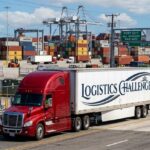
American Trucking Associations leaders shared insights from the past year and their expectations for the coming one during the final day of the trucking industry’s largest annual conference in San Diego.
ATA President Chris Spear, Chair Dan Van Alstine and immediate past Chair Harold Sumerford Jr. sat for a roughly 20-minute interview.
The economy, emissions regulations and a legal battle over truck-only tolls in Rhode Island will have the trucking industry’s attention in 2023.
At CES 2023, Google Showed Up as an Automotive Company
CES is also a big car show, and Google has products for automobiles. They said its higher-resolution maps will debut on the all-electric Polestar 3.
There were also two vehicles at the Google booth at the Las Vegas Convention Center's trailer lot — a BMW i7 with the new Android Auto experience and a Volvo EX90 with Google built in.
And, for the first time since its announcement at I/O 2022, Google showed off the latest Android Auto interface to the public.
Great Experiences with AFLA Over the Years
Excellent networking. Fantastic education. Great experiences all around. There are a lot of good reasons this fleet professional has been involved with AFLA for years.
We Honor the Past, We Look to the Future
At the beginning of every year, we ask Bill Bishop, SVP at FLD Remarketing, to give us his thoughts on the used vehicle market for the year past and predictions for the new year. We are delighted to publish his latest piece. As always, it’s excellent. Be sure and take FLD's latest poll: What Was Your 2022 Hiring Situation?
Steve Saltzgiver, no stranger to these pages, is an enthusiastic ambassador for RTA The Fleet Success Company. This week, Steve talks about RTA's upcoming Fleet Success Summit. Also worth noting is RTA’s new White Paper: Maximizing Warranty Recovery – A Guide to Getting the Highest Return.
We mourn the loss of industry veteran Tom C. Johnson, founder of 100 Best Fleets. Tom passed away December 27 from ALS. He was a visionary and shone a light on public fleets. If you would like to donate to ALS in Tom’s memory, NAFA is hosting this page.
Janice Sutton
Editor in Chief