Tesla’s New Autopilot and Full Self-Driving Hardware Details Surface
Tesla may be planning to release updated or revamped versions of its Autopilot and Full Self-Driving (FSD) Capability features. New information has come to light about potential hardware changes, which would go against what Tesla has been promising all along.
CEO Elon Musk – has been promising completed Full Self-Driving (FSD) for some time now. However, the technology has been much harder to "solve" than Tesla expected.
Tesla has been saying for years now that every car it produces has all the hardware necessary to be able to accomplish the above. The company also removed the radar from its vehicles in favor of a camera-based vision-only setup, which has proven quite successful. More recently, it came to light that Tesla is also removing ultrasonic sensors from its cars.

Motus Taps New CEO to Drive Continued Transformation
Motus, a leader in reimbursement solutions for the mobile workforce, announced the appointment of Phong Nguyen as Chief Executive Officer.
In this role, Nguyen will guide the organization through its next stage of growth, continued market adoption and expansion of the Motus platform.
Established in 2004, Motus provides end-to-end, proprietary software to simplify the reimbursement and management of vehicle, device and remote work costs.
NAFA Taps Hillstaffer to Lead Legislative Efforts
NAFA announced that HillStaffer, a unique bipartisan consulting firm, will take over as NAFA’s new legislative and policy team advocating on behalf of the association and its members on the issues that matter most for the fleet industry.
HillStaffer will work with NAFA’s Government Affairs Committee to take a proactive role in fleet and mobility policy matters to ensure that legislation and regulations reflect the important work NAFA members do.
HillStaffer takes the reins from longtime NAFA legislative counselPat O’Connor who is retiring after many years of playing an instrumental role in NAFA’s legislative initiatives.
NETS New Fatigue Management Guide is Now Available
Driver fatigue is a major contributor to global vehicle crashes, injuries and deaths. Fatigue-related crashes are fully preventable when we understand the effects and impacts of fatigue on the safety of our fleet drivers and take actions to mitigate this driver risk.
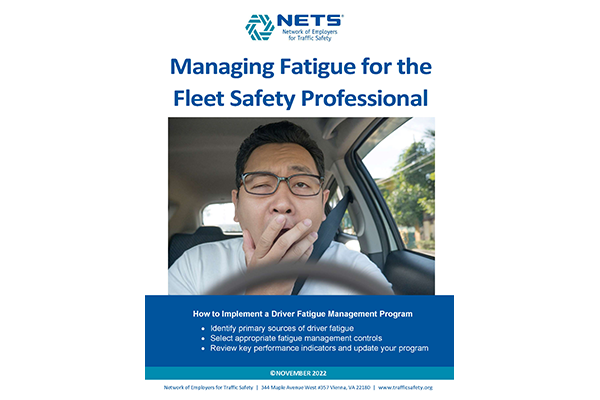 Managing Fatigue for the Fleet Safety Professional is now available on the NETS website. Free to access and Includes useful printable Fact Sheets and images for Social Media messaging.
NETS developed this guide for safety professionals responsible for managing light, medium or heavy vehicle fleets.
Carmakers Have Another Screen in Their Sights: Your Windshield
Major car and tech companies think projection technology is about to become the next big thing as it expands beyond Head Up Display (HUD) in the vehicle driver’s cockpit.
In addition to taking up more visual real estate, the next-generation technology aims to “blend the real and virtual worlds." It'd potentially culminate in a full-screen display with the capability of turning the entire windshield into a big screen TV.
As the driver selects higher levels of augmented reality (AR), the mix of virtual overtakes the physical, and the windshield can become a digital environment that blocks out the harshness of the real world. And these levels of increasing windshield takeover are technically possible, but would it be allowed?