This Is Your Brain on Apps: The Distracted Driving Dilemma
Most motorists know that driving while distracted is extremely dangerous, yet they continue to do it anyway in frightening numbers.
You might consider it a case of collective cognitive dissonance if distracted drivers felt stress or mental discomfort over the contradiction.
Dr. Breeda McGrath, Dean of Academic Affairs at The Chicago School of Professional Psychology, explained that people are lulled into feeling that driving doesn't require their full attention. As modern cars become more automated and less dependent on driver inputs to operate smoothly, that false sense of security is only reinforced.
This result is motorists' belief that they've got this driving thing handled so they can perform other tasks simultaneously — which they decidedly cannot.
According to the Centers for Disease Control and Prevention, 3,154 people in 2013 were killed in crashes involving a distracted driver. That's in addition to 424,000 injuries linked to distracted driving, a 10 percent increase since 2011. All told, distracted driving was implicated in nearly 1 out of 5 crashes.
"Most drivers feel safe and in control, and therefore act accordingly," McGrath told Cars.com. "Driving can feel like a passive, automatic activity that doesn't require thinking, so in that state, people are free to think [about] a variety of other activities, things they want to do, people they need to connect with. It's essentially about multitasking."

John Norris: The Importance of Diversity at AmeriFleet
AmeriFleet President John Norris talks about the importance of diversity in his organization, and how it can lead to good business decisions.
Self-Driving, Electric Car Future Not Necessarily Cleaner, or Cheaper
There's little question that autonomous vehicle development will do more to spur electric vehicle sales than $6-a-gallon gas, but would a surge of EVs on our roadways bring an environmental benefit?
That depends on where you live. In Michigan and most of the industrial Midwest the answer is no, according to a study conducted by Stephen Holland, professor of economics with the University of North Carolina, Greensboro.
In Los Angeles, San Francisco, Portland, Seattle and the larger cities of Texas, the answer would be a resounding yes. In New York, it's basically a wash.
Gart Mott: FLD’s OnceOVR Pro App Can Create Negative Days to Sale
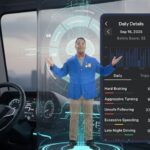
The OnceOVR Pro app from FLD can actually create negative days to sale! For example, the vehicle could actually be sold before the driver parks the vehicle and picks up a new one.
Obama Administration Says Zero Road Deaths in 30 Years
With a record-setting death toll on U.S. roadways as a backdrop, the Obama administration committed to eliminating traffic fatalities within 30 years.
The promise is heavily reliant on the continued development of autonomous vehicles and complimentary smart-vehicle technologies.
Last year was the deadliest year on America’s highways and byways since 2008. It marked the continuation of a trend of rising fatality numbers after years of declines. The increase comes in spite of cars with more safety equipment than ever as well as unrelenting efforts to eliminate distracted driving.