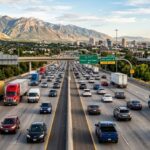
Electric Trucks and Vans Cut Pollution Faster Than Cars
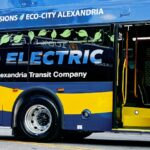
The clock may be ticking for petrol and diesel-powered cars, but it's vans, trucks and buses that are driving the electric vehicle revolution on the world's roads.
This week the UK government followed France in announcing it would ban the sale of such vehicles by 2040, while the mayors of Paris, Madrid, Mexico City and Athens plan to banish diesels from their city centers by 2025.
Almost all car makers now offer hybrid cars and many sell fully electric vehicles.

Ford to Repair Police Interceptor Versions of the Explorer SUV
Ford Motor Co. says it will repair police versions of the company’s popular Ford Explorer SUVs because of a problem that could make it possible for the deadly carbon monoxide to leak into the cabin.
The announcement comes as the city of Austin, Texas, decided to pull 400 Exporers from its police fleet because of the problem. Separately, federal regulators have upgraded to a probe into 1.33 million civilian versions of the Ford Explorer because of reports of exhaust odors entering the cabin. There have been at least three reported crashes involving carbon monoxide exposure.
“This is my family,” Austin’s interim police chief Brian Manley said when announcing the decision to idle the city’s police Explorer models.
Governor McAuliffe Announces Transitioning Government Vehicles to Alternative Fuels
Governor Terry McAuliffe today announced that 319 state and local government vehicles have been transitioned to alternative fuel in the Commonwealth.
Governor McAuliffe also awarded Chesterfield County with the Governor's Green Fleet Award for its leadership in the alternative fuels transition by implementing 50 vehicles and five advanced fueling stations that allow state and local vehicles to visit and refuel.
Low-Quality Lidar Will Keep Self-Driving Cars in the Slow Lane
The race to build mass-market autonomous cars is creating big demand for laser sensors that help vehicles map their surroundings.
But cheaper versions of the hardware currently used in experimental self-driving vehicles may not deliver the quality of data required for driving at highway speeds.
Most driverless cars make use of lidar sensors, which bounce laser beams off nearby objects to create 3-D maps of their surroundings. Lidar can provide better-quality data than radar and is superior to optical cameras because it is unaffected by variations in ambient light.
Pokémon Go’s 1st Birthday – New Expectations for CX
By Wendy Eichenbaum
In July 2016, Pokémon Go exploded on the scene. Within 2 months, over 80 million people had downloaded the game. Businesses attracted customers using in-game features. And though augmented reality (AR) was invented in 1968, millions of people tried AR for the first time. AR is a technology that layers computer-generated elements on top of real world experiences. In the case of Pokémon, Pokémon characters moved around a real map or a camera screen.
A year later, what are the effects of the Pokémon craze? On the surface, it might not be easy to detect. Daily users have by dropped 80%. There is no string of “copy-cat” Pokémon games. And a majority of people do not know the difference between augmented reality and its counterpart virtual reality (VR). VR is a computer-generated simulation of real life that completely immerses users.
However, just below the surface, there has been a profound change. We no longer marvel at the benefits of AR; instead, we expect it.