What Would YOU Do In An Autonomous Car?
Flying cars? Driverless cars? It's the stuff of The Jetson's. And unlike the world of the future they promised us in the go-go 60s, it looks like autonomous cars are around the corner.
I've talked to many friends and colleagues in the business, living in areas of the U.S. where companies like Uber, Google, Tesla, and scores of other companies are all busily trying to perfect their autonomous driving technology.
Billions are being invested, and cities and municipalities are lining up to ensure their participation in what's proving to be an amazing race with no drivers.

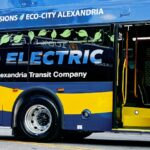
This Adorable Driverless Bus Will Soon be Making Stops at the University of Michigan
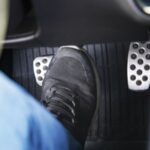
No steering wheel, no pedals, no problem
Starting this fall, students at the University of Michigan will have access to an entirely new form of transportation in the form of this adorable, completely autonomous shuttle bus.
The university plans to deploy two of the shuttles, manufactured by French startup Navya, to service a two-mile route between the Lurie Engineering Center and the North Campus Research Complex on Plymouth Road. The shuttle can carry a maximum of 15 passengers, and lacks a steering wheel or pedals.
Thinking Forward to Autonomous Vehicles
It’s likely that we’re only three to five years away from semi-autonomous vehicles. And that means fleets need to be forward-thinking when it comes to acquiring and cycling vehicles.
NAFA Chapters Keep the Organization Vibrant and Alive
NAFA chapters are at the heart of the organization, and offer a variety of fantastic opportunities for members - both in-person and online.
J.D. Power Reports: New-Vehicle Initial Quality is Best Ever
New-vehicle quality is at its highest level ever, improving a significant 8% from last year, according to the J.D. Power 2017 U.S. Initial Quality Study, (IQS) released today.
Initial quality in this iconic study is measured by the number of problems experienced per 100 vehicles (PP100) during the first 90 days of ownership, with a lower score reflecting higher quality. In this year's study, quality improves across seven of the eight categories measured, with 27 of the 33 brands in the study improving their quality compared with 2016.
Automotive manufacturers are responding to consumer feedback and producing vehicles of the highest quality, said Dave Sargent, vice president, global automotive at J.D. Power. The industry has improved significantly in each of the past three years. Today's vehicles have more things that could go wrong but fewer things that actually do go wrong.