Are Semi-Autonomous Cars Making Us Worse Drivers?
Cars that drive for us some of the time could be lulling us into dangerous distraction, according to several auto industry experts.
Researchers at the Transportation Research Institute at the University of Michigan have told MIT Technology Review in the past that semi-autonomous features, like adaptive cruise control or Tesla’s Autopilot, could increase the incidence of distracted driving. In fact, it's something researchers have been warning about for years.
Now, a Bloomberg report features a bunch of auto experts from across the industry all worrying about the fact that such systems are already having an impact on drivers' abilities.

For Electric Cars to Take Off, They’ll Need a Place to Charge
Around the world, support is growing for electric cars.
Automakers are delivering more electric models with longer range and lower prices, such as the Chevrolet Bolt and the Tesla Model 3. China has set aggressive targets for electric vehicle sales to curb pollution; some European countries aim to be all-electric by 2040 or sooner.
Those lofty ambitions face numerous challenges, including one practical consideration for consumers: If they buy electric cars, where will they charge them?
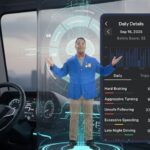
Close Gaps in Fleet Safety to Avoid Negligent Entrustment Liability, Part Four
Part four of a four-part series on negligent entrustment: 'Onboard vehicle technologies that address areas of liability'.
By Brian Kinniry, Senior Director, Strategic Services, The CEI Group, Inc.
Part one of the negligent entrustment series summarized the main grounds for a fleet-related negligent entrustment case. Part two addressed how a fleet manager could build a transparent, fair, and enforceable safety policy to help safeguard the fleet from exposure to this form of liability. Part three walks through technologies unrelated to the vehicle. Part four investigates onboard vehicle technologies that can prevent accidents and reduce liability.
Stop the Meeting Madness
Poking fun at meetings is the stuff of Dilbert cartoons—we can all joke about how soul-sucking and painful they are.
But that pain has real consequences for teams and organizations. In our interviews with hundreds of executives, in fields ranging from high tech and retail to pharmaceuticals and consulting, many said they felt overwhelmed by their meetings—whether formal or informal, traditional or agile, face-to-face or electronically mediated.
One said, “I cannot get my head above water to breathe during the week.” Another described stabbing her leg with a pencil to stop from screaming during a particularly torturous staff meeting.
Such complaints are supported by research showing that meetings have increased in length and frequency over the past 50 years, to the point where executives spend an average of nearly 23 hours a week in them, up from less than 10 hours in the 1960s. And that doesn’t even include all the impromptu gatherings that don’t make it onto the schedule.
What’s Missing in Leadership Development?
Organizations have always needed leaders who are good at recognizing emerging challenges and inspiring organizational responses.
That need is intensifying today as leaders confront, among other things, digitization, the surging power of data as a competitive weapon, and the ability of artificial intelligence to automate the workplace and enhance business performance.
These technology-driven shifts create an imperative for most organizations to change, which in turn demands more and better leaders up and down the line.