What’s the Future of Electric Vehicles?
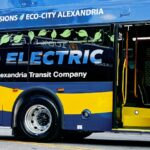
Electric vehicles made recent news when Trump administration official Larry Kudlow announced their intent to remove subsidies for their purchase.
This news might cause businesses providing company cars to their employees to pump the breaks on exploring the environmental future of their fleet. But there’s much more to the electric vehicle conversation than subsidies for going green.
What brought about these subsidies in the first place?
In President Barack Obama’s 2011 State of the Union, he made his plan to curb CO2 emissions known with a pledge to see America as the first nation with one million electric vehicles. There are obvious draws to owning an electric vehicle. But the upfront cost is quite a bit higher than purchasing a standard vehicle. We’ll talk more about what goes into this cost later, but just know it’s a considerate barrier to entry.
Read more from Motus.
A Toaster on Wheels to Deliver Groceries? Self-Driving Tech Tests Practical Uses
Starting this week, two small self-driving cars made by Nuro, a start-up, will chug along at no faster than 25 miles an hour to deliver groceries in Scottsdale, Ariz.
Nuro was founded in 2016 by Dave Ferguson and Jiajun Zhu, two key engineers from Google’s self-driving project, which eventually morphed into the Waymo autonomous business. Nuro, which is based in Mountain View, Calif., and has raised $92 million in funding, decided to focus on creating tiny self-driving cars — they measure 104 inches long by 43 inches wide by 70 inches high — that would solely make local deliveries.
Read the article at The New York Times.
Somebody is Watching Me
By Robert J. Wilson, Esquire
This month we’re presenting an immensely important topic on privacy. Issues related to this have long tentacles and originate from many diverse sources including the vehicle you are driving. A good friend of mine, Robert Wilson, General Counsel for ARMD Resource Group, recently wrote an article on this very topic and he was gracious enough to allow me to share this with you. I think you’ll find Robert’s insight on this matter to be quite eye-opening. Read on. — Art Liggio, Driving Dynamics President and CEO
In 1984 Motown released a song by a singer whose stage name was “Rockwell.” The name of the song is the name of this article, “Somebody is Watching Me.” The song became a minor hit and is known for having Michael and Jermaine Jackson doing guest vocals and for the fact that Rockwell was a son of a producer, Motown’s CEO Berry Gordy. For purposes of this article, I would like to draw attention to a portion of the chorus: “I always feel like somebody’s watching me. And I have no privacy...”
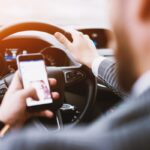
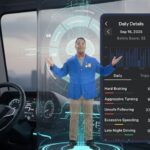
So, how does this relate to compliance? The focus here is not on “somebody” watching you, but rather on cars “watching” you.
Staying in Rhythm With Your Customer
By Laura Jozwiak, Senior Vice President of Sales and Client Relations, Wheels, Inc.
I was listening to a podcast featuring a study on human behavior. The theory being tested was how early we develop empathy and how people learn with whom to connect and trust.
The experiment involved lining up two rows of adults; the first row held a baby in a carrier facing forward; music played. The adults carrying the babies swayed their bodies to the rhythm of the music. The second row of adults faced the babies; one half swayed to the rhythm of the music and the other half countered.
After the session, the babies and adults played together. During that time, the study showed that if an adult dropped a toy, a baby would more often retrieve the toy for or help the adult who had swayed in the same rhythm than the adult who countered.
How fascinating! Our natural tendency, from a very early age and without verbal communication, is to gravitate to those that we believe are more in sync with us.
IRS Announces 2019 Business Mileage Rate of 58 Cents per Mile Powered by Motus Cost Data and Analysis
Understanding This New Watermark and How to Navigate Mileage Reimbursement Methods for Different Business Needs
The Internal Revenue Service (IRS) today announced the 2019 national business mileage rate of 58 cents. The IRS calculates the rate using data provided by Motus.[i] Based on a consistent method and statistical analysis of vehicle cost components from the prior year, the 2019 business mileage rate reflects an increase of 3.5 cents from the previous year and will go into effect January 1, 2019.