Autonomous Cars? Not Yet. Digital Cockpits, Assisted Driving the Latest Auto Tech Focus
Car companies and the tech companies they work with seem to acknowledge the reality that most of the vehicles we find ourselves in are going to be driven by people.
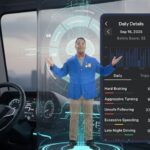
At the CES in Las Vegas, several vendors demonstrated “digital cockpits” that dramatically improve the displays and controls with which drivers interact.
Read the article at USA Today.

Speed Laws Proposed for the German Autobahn
A cap of 130 kilometers per hour (80 mph) is being recommended by unions and environmentalists, putting an end to Germany’s famous open-road policy.
As a signatory of the Paris Climate accord, Germany must slash emissions from energy, industry, heating and cooling and farming by 2030. CO2 emitted by vehicles has increased since 1990.
Read the article at Bloomberg.
Cybersecurity: How Well Protected Is Your Company Against the Rising Tide of Malicious Disruption?
By John F. Wysseier, President and CEO, The CEI Group, Inc.
My theme in this continuing blog is that business disruption – the kind that results from a continuous strategic embrace of cutting-edge technology – is not just a good thing, but a requirement. Call it creative destruction. But there’s another kind of technology-powered disruption that is simply destructive: the hacking of an organization’s digital infrastructure.
How pervasive is the threat? Consider the following:
• Computer Ventures, a researcher and publisher covering the global cyber economy, estimates that cyberattacks cost the global economy $3 trillion in 2015, a figure is likely to double to $6 trillion a year by 2021.
• PWC, the accounting and consulting firm, says that 32 percent of U.S. organizations were victims of cybercrime in 2016, and projects that 34 percent will have become victims by the end of 2018.
• Microsoft estimates that average cost of a data breach to a business is $3.8 million, and that the average attacker resides in a network for 146 days before being detected.
• A University of Maryland study found that hackers were attacking computers and networks “at near-constant rate”, with an average of one attack every 39 seconds.
Ford and VW Create Global Alliance Building Trucks and Vans
Ford and the Volkswagen Group are combining forces in a global alliance that will be overseen by a joint committee with an equal number of people representing each automaker. They will be making pickup trucks and commercial vans together.
The medium-sized pickup truck will be built for both companies as early as 2022. The vans are expected to be built in a similar time frame. Volkswagen will build a city van, while Ford will build a larger, 1-ton commercial Transit vans. They are exploring collaborations on autonomous and electric vehicles as well as new mobility services.
Read the article at The Verge.