Study Reveals The 14 Most Deadly Car Models
Fatalities are almost twice as likely to occur in car crashes if you are traveling in a subcompact or sports car.
Data analyzed from the U.S. Fatality Analysis Reporting System and iSeeCar's.com's data for cars from the model years 2013-2017, found that fourteen models were found to be at least twice as likely as the average car to be involved in a fatal accident. Mitsubishi Mirage topped the list.
Read the article at Money Talks News.

Ford and the Future: Where the Legacy Automaker Stands in the Race for a Driverless Car
The promise of the self-driving car has been a long time coming. While fully autonomous vehicles have yet to take over the roadways of the world, almost 50 different companies are working to make it a reality.
Some are automakers you’ve heard of - Volvo, Mercedes-Benz, BMW, Toyota, General Motors, and Tesla. Others include equally well-known tech giants, such as Alphabet’s (parent company of Google) Waymo division, Samsung subsidiary HARMAN (in conjunction with Swiss automaker Rinspeed), and both Apple and Amazon.
Then there are the efforts of the original US automaker, Ford.
Read the article at Car Buying Strategies.
Pedestrian and Cyclist Deaths Rise Despite New Vehicle Safety Features
While cars have been getting safer for occupants, they remain potentially deadly for those outside the vehicle.
The number of bicyclists killed last year shot up 10% and pedestrian deaths rose 4%.
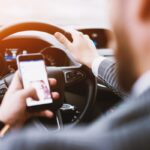
Experts have pointed to distracted driving and the growing popularity of SUVs, which can be more deadly than cars because they smash directly into victims, instead of pushing them up onto the hood or windshield.
A few automakers rolled out pedestrian and bicycle detection as part of their automatic braking systems, but most haven't.
Read the article at USA Today.
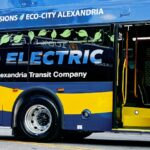
Transport Problem Will Not Be Solved By Electric Cars, UK Report Says
The Centre for Research into Energy Demand Solutions (CREDS), an academic consortium of more than 80 academics across the UK, issued a report calling on the government to devise a strategy allowing people to have a good standard of living without needing a car.
The report warns that electrifying cars will not address traffic jams, urban sprawl and wasted space for parking. Walking, cycling, public transport and vehicle-sharing should be made available wherever possible.
Read the article at BBC News.
Toyota to Begin Testing Improved Solar Roof on the Prius
Toyota will start testing a new solar roof for the Prius that it says can add as much as 44.5 km of range to the plug-in hybrid a day.
The solar cells, which are being manufactured by Sharp, are just 0.03mm thick, but deliver around 860 watts of power, and can even charge the car while it’s being driven.
Testing is due to start on public roads later this month, but there’s no word on when it might make it into a commercial vehicle.
Read the article at The Verge.