ARI Launches Virtual Learning and Webinar Series on June 16
The four-part, interactive series will highlight fleet fundamentals designed to help organizations navigate the road to recovery
ARI® today announced a four-part, interactive virtual learning and webinar series which will provide comprehensive fleet management strategies intended to help organizations respond to the impact of the COVID-19 pandemic. The series kicks off on June 16 and will cover a number of fundamental topics on the road to recovery including cost control strategies, how to adjust to a disrupted used vehicle market, and ways to overcome supply chain challenges.
ARI’s team of fleet management experts will provide insight and guidance on several of today’s most complex challenges emerging following the COVID-19 pandemic during four webinars:

Truck Autonomy Maybe The Key To Reducing Congestion And Increasing Safety For Everyone
Commercial trucking may be the answer to the out of economic balance between the supply and demand of rush hour congestion and empty roads at 3am.
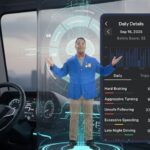
Using the automotive communication technologies (V2X) to build smart roads detecting congestion-based signals, along with advanced ADAS technology for commercial vehicles which provide higher safety for night time travel, will likely move non time sensitive commercial traffic into times of low utilization.
If the structure works as intended, the investment in the incentive structures are funded by lower congestion for everyone, a decreased need to expand the civil infrastructure, and increased safety for everyone.
Read the article at Forbes.
Ford-Volkswagen Alliance Includes Shared Production of 8 Million Commercial Vehicles
Automakers Ford Motor and Volkswagen plan to share production of 8 million commercial vehicles with assembly expected to begin as early as next year and continue through the life cycles of the products.
Products will include a city van created and built by Volkswagen; a 1-ton cargo van engineered by Ford; and a Volkswagen medium-sized pickup that will use the platform of the Ford Ranger.
“In light of the Covid 19 pandemic and its impacts on the global economy, more than ever it is vital to set up resilient alliances between strong companies,” Volkswagen CEO Herbert Diess said in a release. “This collaboration will efficiently drive down development costs, allowing broader global distribution of electric and commercial vehicles, and enhance the positions of both companies.”
Read the article at CNBC.
Automakers Need to Address Batteries to Improve EV Profitability
Battery-electric vehicles comprise less than 5% of all new vehicles sold in the U.S., but that number is expected to rise to 50% by 2035 due in part of improving battery performance and falling prices.
Lux Research believes automakers should focus on their battery-supply chain, specifically battery shortages. The shortages have already caused some automakers to reduce their BEV production plans.
For many automakers, the goal has been to get their EVs under the $30K bar, putting it on par with most non-electric vehicles sold in the U.S. As automakers continue to improve charging speed and minimize battery size, more consumers are expected to seek out electric vehicles.
Read the article at The Detroit Bureau.
Fleeting Costs: Transitioning Your Idle Fleet to a FAVR Program
By Jeremy Young, Director of Sales at Motus
The coronavirus pandemic has impacted the day-to-day lives of the mobile workforce, as shelter in place orders have forced mobile workers to stay home.
As a result, companies utilizing fleet programs are finding themselves left with a high volume of fixed-cost assets that are currently sitting idle. Employers are searching for ways to curb overall spending while these company-provided vehicles go unused and continue to accumulate monthly corporate expenses regardless of usage.
While a fleet program may have best suited a business less than three months ago, decision makers are now looking for alternative programs to help them navigate this time of uncertainty in a way that’s best for the organization and its team.