The Big Texas Freeze Doesn’t Bode Well For EV Infrastructure
When Winter Storm Uri swept through Texas, the whole state shut down. Electricity was hit-or-miss for several days, with certain areas of the state (read: lower-income areas) hit the hardest. And that doesn’t bode well for introducing electric vehicles on a wider scale.
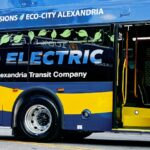
Austin, the state capitol of Texas, has spent the last two decades budgeting $650 million for electric buses and a charging facility for 187 of those vehicles. In 2022, if Austin needs to buy a vehicle, it’s going to buy an electric one. But city officials certainly didn’t plan or a winter storm to render those buses essentially inoperable because they couldn’t be charged. If there’s ever a surge in demand for power again in the future, the whole city could suffer.
Power grids across the country have been overtaxed for years. The switch to EVs will ultimately require grids to be taxed even further as a result of a more robust charging infrastructure. A multi-million dollar investment in EVs will require a multi-billion dollar investment in infrastructure to ensure the country keeps functioning.
Read the article at MSN.

After Rise in Speeding During Pandemic, Groups Launch Initiatives to Slow Drivers Down
Three national roadway safety organizations — the Governors Highway Safety Association (GHSA), Insurance Institute for Highway Safety (IIHS) and National Road Safety Foundation (NRSF) — are partnering to fund and evaluate pilot projects by two states to reduce speeding.
Maryland and Virginia will each receive $100,000 to develop, implement and evaluate speed management pilot programs that leverage engineering, equitable enforcement, education, public outreach and advocacy strategies simultaneously. Maryland’s project will be located in a rural setting, while Virginia’s will be in an urban area.
The speed pilots will launch once traffic patterns stabilize enough for IIHS experts to conduct a valid before-and-after evaluation of the programs. The goal is to develop a template for effective speed reduction strategies that can be duplicated in other states and communities.
Read the article at GHSA.
FedEx Investing $2 Billion to be Carbon Neutral by 2040
By 2040, the entire FedEx parcel pickup and delivery fleet will comprise zero–emission electric vehicles, according to the delivery services giant. The effort starts with phased programs to replace existing vehicles.
By 2025, 50% of FedEx Express global package pickup and delivery vehicle purchases will be electric, rising to 100% of all purchases by 2030, the company said.
GM’s newly launched subsidiary, BrightDrop, which will offer new electric first-to-last-mile products, from ePallets to a fully electric commercial delivery vehicle, is partnering with FedEx Express. The delivery company plans to test two BrightDrop vehicles. FedEx is scheduled to get the first 500 BrightDrop vans by year end, thousands more later on.
Read the article at The Detroit Bureau.
From ‘Experiment’ to ‘Daily Driver’: Latest EVs Offer Good Range at Affordable Prices
It's the dilemma every automaker is frantically trying to solve: Convincing Americans to give up gas-powered cars for electric vehicles. The barriers are diverse. There's range anxiety. A lack of nationwide chargers. Steep prices. A general bewilderedness of what an electric vehicle is and how it works.
Many automakers, however, are deciding to build snappy EVs that offer solid range at attractive prices - a strategy that could pump up sales and market share - of EVs this year. The average transaction price of an EV in 2020 was $54,206 vs. an industry average of $39,251 - an increase of 38.1%, according to Edmunds.
The most affordable EV on the market currently belongs to British marque MINI Cooper. The quirky automaker unveiled its hardtop two-door SE last March. Roughly 1,200 units of the $29,995 hatchback have been sold in the U.S. and more than 80% of SE buyers are new to the brand.
Read the article at MSN/ABC.
EV Rollout will Require Huge Investments in Strained U.S. Power Grids
During several days of brutal cold in Texas, the city of Austin saw its fleet of 12 new electric buses rendered inoperative by a statewide power outage. That problem will be magnified next year, when officials plan to start purchasing electric-powered vehicles exclusively.
More electric cars will require both charging infrastructure and much greater electric-grid capacity. Utilities and power generators will have to invest billions of dollars creating that additional capacity while also facing the challenge of replacing fossil fuels with renewable energy sources.
A model utility with two to three million customers would need to invest between $1,700 and $5,800 in grid upgrades per EV through 2030, according to Boston Consulting Group. Assuming 40 million EVs on the road, that investment could reach $200 billion.
Read the article at Reuters.