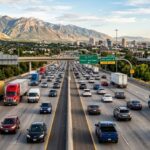
What if Cars Could Stop You From Driving Drunk? A Peek at the Latest Tech
The recent infrastructure law included a provision mandating that, starting in a few years, all new cars must include some sort of technology to detect and prevent drunk driving.
One system that is being road-tested today involves sensors that automatically take breath samples and look for traces of alcohol, with no need to blow into a tube. Another option would be to bypass measuring blood alcohol levels directly, and instead look for signs of impairment using cameras.
In theory, a sober driver wouldn't notice the system at all - they'd just get in their vehicle and drive like normal, without doing anything in particular. These examples of technology that could prevent drunk driving still need refinement before they're ready for mass adoption.
Read the article at NPR.
Pittsburgh Unveils Large Electric Vehicle Charging Depot For City Fleet
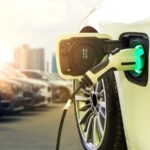
City officials on Thursday unveiled a new electric vehicle fleet charging depot at Pittsburgh’s Second Avenue Parking Plaza and announced plans to buy new electric recycling trucks.
The charging station is the largest in Western Pennsylvania, according to city officials. It will allow the city to charge its electric vehicle fleet, which currently includes 26 fully electric vehicles.
The charging depot includes 15 dual-hose chargers, which can fully charge a vehicle in six to eight hours. The site - which will become the city’s main electric fleet charging depot - will be capable of charging 30 electric vehicles simultaneously. This moves the city toward its climate goal of converting to a completely electric vehicle fleet by 2030.
Read the article at TribLive.
What’s Ahead For The Auto Industry in 2022?
Automakers worldwide produced about 8 million fewer vehicles than planned in 2021, due to product shortages. Even if production rebounds, dealers won't be able to build back inventories until well into 2022. As a result, buyers should expect limited choices - while prices will continue rising at a record rate,
When America went into lockdown, the industry discovered a novel idea. Since customers couldn’t come to dealers, dealers came to them - over the internet. More and more customers are shopping for their cars online, and many retailers schedule test drives and then deliver new vehicles to a buyer’s home or office.
EVs start their move into pole position. They account for a modest fraction of U.S. new vehicle sales, but demand for battery-electric vehicles doubled during just the first half of 2021. Several factors will play a role, starting with a plethora of new offerings: Analysts anticipate the number of long-range models will quadruple this year.
Read the article at NBC News.
How to Remove Snow From Your Car and Avoid Being the Most Hated Person in Traffic This Winter
Leftover snow and ice on your car might seem harmless, but the consequences can be catastrophic. A large chunk of snow can easily blind drivers behind you, or a big sheet of ice can break free and go sailing through the air, causing serious damage.
Even if it’s a light dusting, take a few seconds to make sure the roof is snow and ice free. If there's a heavy layer to deal with, you'll want to start by removing the bulk of it without touching the paint with a snow broom.
Take a few minutes to go over your vehicle's exterior lights to ensure snow isn't impeding visibility. While you're already cleaning, take a minute to check your mud flaps and clear away any heavy deposits that might have built up here.
Read the article at The Drive.
State of Michigan Employees Logging Far Fewer Miles For Government Business During Pandemic
In the 2021 fiscal year, state vehicles used just under 6 million gallons of fuel to drive about 91.3 million miles, State of Michigan records show. That is down sharply from 2019, before the start of the pandemic, when state vehicles used about 7.2 million gallons of fuel to drive just over 128 million miles.
More dramatic reductions were seen in the area of reimbursements. State employees used their own vehicles to drive just under 4.6 million miles in 2021, down from about 15.7 million miles in 2019. The number of vehicles in motor pools was reduced to 213 in 2021 from 320 in 2019. In 2021, state employees took 8,851 motor pool trips to travel about 1.1 million miles. That is down from 44,289 motor pool trips and nearly 6.2 million miles in 2019.
Total costs in the 2019 fiscal year were $74.3 million, but that year's total was unusually lower than it would normally be, due to a one-time $2.2 million reduction in insurance costs. Total fleet costs were $75.7 million in 2020 and $76.1 million in 2021.
Read the article at Detroit Free Press.