State of Auto Insurance in 2022
ValuePenguin.com by LendingTree
Auto insurance rates have risen again after falling last year — consumers can expect an average increase of 0.6% across the U.S. for 2022. And the average cost of full coverage car insurance across the U.S. has reached $1,935 annually.
ValuePenguin used the Quadrant Information Services database to analyze 15 million quotes for drivers across the country. These, combined with RateWatch filings, show the current and historical pictures of the auto insurance industry.
They also reveal the cost of a traffic violation, ticket or accident by state. Ouch!

A Call to Action: Referrals, Not Just for Sales Reps Any More
By Ed Pierce, President of ITA Communications. Fleet.
“An amazing 91% of B2B buyers’ decisions are influenced by word-of-mouth. So why haven’t you built out your B2B referral marketing program yet?”
My good friends at Sagefrog, a Philadelphia-area B2B marketing agency, recently asked that question to lead off an excellent blog.
Written by Kenzie Fitzpatrick and entitled “Transform Your Business Growth with B2B Referral Marketing,” her article addresses a valuable marketing tool that often times is dismissed as sales’ responsibility.
Specifically, Fitzpatrick distinguishes between “word-of-mouth marketing” and “B2B referral marketing.” The former comprises a simple list of satisfied customers who will advocate for your company. The latter, “B2B Referral Marketing,” a formalized process that engages advocates, documents the number of referrals, and rewards customers for helping the business grow.
Big Cars Are Killing Americans
Americans have traded sedans for crossovers and SUVs for full-size pickups with total abandon over the past decade. One common notion—though auto-safety experts will say it’s not that simple—is that it’s safer to get around in what’s basically a tank.
But those benefits are only for people inside the vehicle. People outside—pedestrians, cyclists, wheelchair users—are in more peril. Passenger and driver deaths have remained mostly stable over the past decade while pedestrian fatalities have risen by about 50 percent.
Over the long term, we have to shift our focus from blaming individuals when they are struck by cars - “Did you look both ways?” - to addressing the systemic factors that put them at risk. The government can no longer allow the auto industry to treat walkers and bikers like collateral damage.
Read the article at Route Fifty.
NYC Orders Nearly 200 Mustang Mach-Es for Police and First Responders
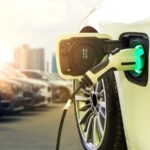
New York City announced it has ordered 184 fully electric Ford Mustang Mach-Es. The vehicles are set to be delivered by June 2022, as part of an $11.5 million contract that will remain in place for five years.
The city said the Mach-Es would be used by the New York Police Department, New York City’s Sheriff’s Office, the Department of Correction, the Department of Parks and Recreation, the Department of Environmental Protection, and other emergency management and response departments.
New York City plans to buy over 1,250 electric vehicles in 2022, transitioning all law enforcement vehicles to electric ones by 2035. “Every single City vehicle we electrify is one step forward to advance clean air and a climate-friendly New York City,” said Ben Furnas, head of the mayor’s office on climate.
Read the article at The Verge.
Car Makers Like Some Tech Features More Than Car Buyers Do
While car buyers say new vehicle technology is a leading reason they choose one vehicle over another, there are some tech features that they would just as soon do without.
“New-vehicle prices are at an all-time high, partly as a result of an increased level of content,” said Kristin Kolodge, executive director of human machine interface at J.D. Power. “This is fine if owners are getting value for their money, but some features seem like a waste to many owners.”
For example, 61% of owners say they have never used the in-vehicle digital market technology, and 51% of those saying they have no need for it. Owners feel similarly about the driver/passenger communication technology, with 52% saying they have never used the technology, and 40% of those saying they have no need for it.
Read the article at Insurance Journal.