Geneva Motor Show: Kia EV6 Awarded 2022 Car of the Year
February 28, 2022 - The Kia EV6 is « The Car of the Year » 2022. The award ceremony took place in Geneva on Monday 28 February 2022, and was broadcast live on the Geneva International Motor Show website, whose team organized the ceremony for the eleventh time in a row.
With the trophy for « The Car of the Year », the Kia EV6 wins the most prestigious and coveted award in the automotive world, presented since 1964.
Jason Jeong, President at Kia Europe, commented: “It’s a great honor to have won the 2022 European Car of the Year with the EV6, the first ever Kia to win this prestigious award. The EV6 is truly a landmark development that’s been designed from the outset to make electric mobility fun, convenient and accessible by combining a highly impressive real-world driving range, ultra-fast charging capabilities, a spacious high-tech interior and a truly rewarding driving experience."
Element Fleet Launches ‘Arc by Element’ to Simplify Clients’ Transition to EVs
In an effort to assist clients in navigating and simplifying the challenging transition from internal combustion engines (ICE) to Electric Vehicles (EVs), Element Fleet Management has introduced Arc by Element.
This new EV solution bolsters Element’s already robust roster of fleet management services.
"With the prerequisites for wide-scale EV adoption by commercial vehicle fleets looming on the horizon — the right vehicle types at the right price points, improved access to charging infrastructure — and with organizational ESG mandates increasingly targeting sustainability, we have seen a significant increase in client interest in moving their fleets “from grey to green” through EV adoption,” said Jay Forbes, President and CEO of Element.
Merchants Names Alex Coveney New Director of Strategic Partnerships
Merchants Fleet has announced the hire of Alex Coveney as Director of Strategic Partnerships for Enterprise level accounts in North America and Canada.
In this role, Coveney will oversee strategic OEM (Original Equipment Manufacturer) and mobility partnership development, specializing in custom transportation solutions which includes building strategies and implementation of EV (electric vehicle) adoption, charging infrastructure and fleet integration.
As a successful former business owner, Coveney brings over 20 years of business leadership experience to the role. Prior to joining Merchants, Coveney also led numerous regional teams at Enterprise Holdings in addition to serving on the Enterprise Truck Rental Global Advisory Board.
Tesla Takes Top Honors in J.D. Power EV Home Charging Study
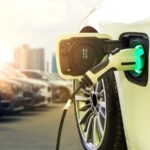
Owners of electric vehicles give high marks to “next level” home chargers, according to the J.D. Power 2022 U.S. Electric Vehicle Experience (EVX) Home Charging Study, with Tesla taking home top honors for the second consecutive year.
The study evaluates EV owner satisfaction in three segments, including Level 1 portable, Level 2 portable and Level 2 permanently mounted charging stations. However, only Level 2 permanently mounted charging station owners are award eligible. Satisfaction is measured across eight key elements: fairness of retail price, cord length, size of charger, ease of winding & storing cable, charging cost, charging speed, ease of use and reliability.
All combined, these elements present a concise picture of owner experience, as well as charger performance.
Dave Bean Joins FMW as Associate Editor
Fleet Management Weekly is delighted to announce the appointment of Dave Bean as an Associate Editor of Fleet Management Weekly.
Dave will be responsible for a number of editorial responsibilities at FMW. "Dave is an excellent addition to our editorial team. As FMW continues growing, we are excited to bring onboard someone with Dave's talents and experience," said Janice Sutton, Editor in Chief.
Dave has managed various studies for J.D. Power and Associates, including APEAL and SSI. Prior to that he served as a data analyst for Morpace International, with a focus on Lincoln, Land Rover, Jaguar and Aston Martin.