VW’s Electrify America Unveils New ‘Human-Centered’ EV Charging Stations
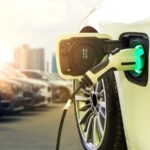
March 24, 2022 - Charging an electric car isn’t as straightforward as refilling a gas tank. Recharging times can vary depending on the vehicle type and power source. Battery experts claim that charging times will eventually shrink to around 10 minutes, but not for years to come.
The company’s new stations are organized around comfort, security, and amenities. Electrify America says the goal is to create “a more inviting transition to an electric vehicle lifestyle from traditional gas station.”
The most notable change for Electrify America’s current design is the inclusion of solar panel awnings, which have the dual effect of sheltering customers from the sun and inclement weather while also supplying power for the station’s operations.

Gabriel Marrero Joins Masterack as HR Director
Jon Toups, President of Masterack, LLC, a JB Poindexter & Co business, is pleased to appoint Gabriel Marrero, to the position of Director, Human Resources.
Marrero joins Masterack with over 20+ years of Human Resources Management experience.
Speaking about Gabe’s appointment, Toups stated, “Gabe is another important piece to our company. He comes to Masterack with not only many years of Human Resources experience but the right strategy to enhance our business functions and company culture."
NAFA: Urge Congress to Renew the Biodiesel Tax Credit
The biodiesel tax credit is set to expire at the end of this year. Ask Congress to support the Biodiesel Tax Credit Extension Act (S.1806/H.R.3472) to extend the biodiesel and renewable diesel excise tax credit through 2025.
The biodiesel mixture tax credit allows qualified entities, including tax-exempt fleets, registered with the Internal Revenue Service (IRS) to receive a $1/gallon tax credit for biodiesel or renewable diesel sold or used as a fuel in their trade or business.
Fleet managers must have their voice heard on this issue, as they can speak to the utility of the credit from a user’s perspective, rather than the producers who directly profit from biodiesel and renewable diesel sales. URGE CONGRESS TO RENEW THE BIODIESEL TAX CREDIT TODAY
Mike Albert Fleet Solutions Launches Fleet Studies Lab
Online learning hub is designed to help decision makers get the most out of their fleets.
Mike Albert Fleet Solutions today announced the launch of its Fleet Studies Lab, an online learning hub offering a robust collection of content to help fleet managers make the most of their current and future fleets.
“In today’s highly competitive environment, companies must do everything they can to make their fleets as efficient and effective as possible to positively impact the bottom line,” said Jeff Hart, President of Mike Albert Fleet Solutions.
Top Leaders from Electrada and Holman Discuss New Electric Mobility Partnership
By Ed Pierce, Contributing Editor
The new partnership of Holman and Electrada presents a major step forward for fleets transitioning towards electrification.
Holman, which provides fleet management services to corporate, government, and utility fleets, recently announced a partnership with Electrada, who designs, builds, owns, operates, and maintains EV charging infrastructure. Their partnership will help companies that operate fleets make a seamless transition to electric vehicles in a way that provides reliable service and simplified fueling costs.
The successful transition from internal combustion engine (ICE) vehicles to EVs involves much more than selecting vehicles. Of equal importance is a focus on infrastructure, namely the power needs, charging locations, and reliable operation of charging stations. This adds quite a few new factors beyond the ICE costs that most fleet managers are familiar with. By partnering with Electrada, Holman will be able to ease the transition for their customers and help them meet their corporate sustainability goals.
In order to get more information about the new partnership between Electrada and Holman, we sat down with two of the top leaders from both organizations. Emily Graham is the Director of Sustainability at Holman while Kevin Kushman is the CEO of Electrada. They answered a variety of questions about their new partnership and what their thoughts were of the general shift towards electrification among fleets.