What a Week It Was!
Last week’s AFLA 2022 ‘Forward Together’ corporate fleet conference was exceptional. It was clear that we were all excited to be together. The sessions were outstanding; the networking -- a cornerstone of the AFLA conference experience, was divine; and the desert setting was breathtaking.
This week, Rich Mallek, Director of Business Development at FLD Remarketing offers us his thoughts on the conference and the state of the fleet industry.
Kudos to the AFLA conference team for a marvelous experience and special thanks to AFLA president Mike Antich, Editor and Associate Publisher at Automotive Fleet. It was an honor of a lifetime to be inducted into the Automotive Fleet Hall of Fame, as well as to accept the same award for the late Chuck Parker. I spoke with Chuck's family afterwards and related the kind comments I heard about Chuck. His fleet and automotive career was extensive and he touched many of our lives.
Janice Sutton
Editor in Chief
FMW’s Own Janice Sutton Inducted into the AFLA Fleet Hall of Fame
Fleet Management Weekly, the industry's foremost source for fleet news, features, and video interviews, is proud to announce the induction of co-founder and CEO Janice Sutton into the 2022 Automotive Fleet & Leasing Association's Hall of Fame.
The AFLA Hall of Fame “recognizes fleet industry leaders and pioneers who have contributed significantly to the commercial fleet management profession.” To be considered for the Fleet Hall of Fame, inductees need to have at least a decade of experience in fleet management.
Janice said, "I am humbled by this extraordinary recognition. It's truly overwhelming to be included among the legends of our industry who have preceded me into the Automotive Fleet & Leasing Association's Hall of Fame.
I thank the countless fleet professionals who have guided and inspired me throughout my career. We learn from each other every day."
Siemens and Volta Trucks Join Forces in Fleet Infrastructure
Siemens Smart Infrastructure and Volta Trucks have announced a push to facilitate full fleet electrification. They signed a letter of intent outlining how they will jointly seek to deliver “turnkey solutions” for fleet operators by integrating vehicles, charging infrastructure and energy management.
Siemens will, of course, oversee the technical infrastructure, including the hardware and software required to operate the charging and power distribution infrastructure for fleets of Volta Zeros.
Internally the partners will also work to optimize the operation by advanced analytical and simulation models which consider factors such as fleet duty cycles, charging times, battery life, optimal energy utilization and costs, and asset management.
Salesforce Introduces Automotive Cloud
After financial services, health and education technology, Salesforce is focusing on the auto industry with the launch of Automotive Cloud, a dedicated product to help key industry stakeholders make the most of the data available to them.
The product uses Driver 360, which leverages the full power of Customer 360 to create a single, real-time view of the entire customer and vehicle lifecycle for automakers, dealers and automotive finance groups.
It brings together information from all available sources, including customer interactions and milestones, helping automakers not only deliver improved service and experiences, but also drive revenue through better lead conversion and collaboration.
Researchers Develop Tech That Charges EV Battery in 10 Minutes
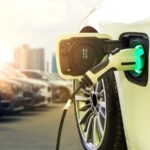
A breakthrough in electric vehicle battery design has enabled a 10-minute charge time for a typical EV battery. The record-breaking combination of a shorter charge time and more energy acquired for longer travel range was announced in the journal Nature.
“The need for smaller, faster-charging batteries is greater than ever,” said Chao-Yang Wang, the William E. Diefenderfer Professor of Mechanical Engineering at Penn State and lead author on the study. “There are simply not enough batteries and critical raw materials, especially those produced domestically, to meet anticipated demand.”
In August, California’s Air Resources Board passed an extensive plan to restrict and ultimately ban the sale of gasoline-powered cars within the state. By 2035, the largest auto market in the United States will effectively retire the internal combustion engine.