Dupré Logistics & SuperVision
Transportation and logistics fleets partner with SuperVision to help monitor, support, and retain drivers. With continuous license monitoring, fleet compliance, safety & risk analytics, and driver training, get the peace of mind that comes from knowing your drivers are good to go wherever business takes them.

Small Car Performance is a Mixed Bag in New Side Crash Test
Seven of 11 small cars tested earn good or acceptable ratings in the Insurance Institute for Highway Safety’s new, tougher side-impact test, but four models are rated poor.
IIHS developed the updated side crash test after research showed that many of the real-world side impacts that still account for nearly a quarter of passenger vehicle occupant fatalities are more severe than the original evaluation.
The Mazda 3 sedan and Mazda 3 hatchback earn good ratings. Five other vehicles — the Nissan Sentra, Toyota Corolla sedan, Toyota Corolla hatchback, Honda Civic sedan and Honda Civic hatchback — are rated acceptable. The Kia Forte, Subaru Crosstrek and the Subaru Impreza sedan and wagon are rated poor.
More People Who Consider an EV Are Buying Them
More people bought an electric car in the third quarter than in the second, even though slightly fewer people considered buying one. Hybrids and plug-in hybrids (PHEVs) still earn a serious look from more new car shoppers than electric vehicles (EVs) do.
The numbers suggest that EV shoppers may be a unique breed and pursue different shopping strategies than traditional buyers of hybrids or pure combustion-powered vehicles. They’re more likely to know what they want, and they research fewer options.
For the first nine months this year, Toyota accounted for nearly half of all hybrids sold in the U.S. The Japanese automaker sold 100,000 hybrids last quarter. But it has been hit harder by inventory shortages than any other major automaker — it probably could have sold many more if it had them in stock.
GM’s exploring V2H, V2G, and Virtual Power Plant capabilities for EVs
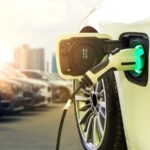
General Motors is looking to accelerate the adoption of vehicle-to-grid (V2G) capabilities in EVs. A new partnership with San Diego Gas & Electric will investigate integrating bidirectional charging into the grid to improve energy distribution.
In October, GM introduced a new business unit called GM Energy, which aims to “reimagine” our energy system with a host of new products, dedicated backup home power, and a network of charging stations.
GM and SDG&E will take a holistic approach, studying solutions needed to accelerate vehicle-to-grid adoption, which includes creating systems to help utility providers and automakers tap into cloud-based energy management platforms and distributed energy resources (EVs with V2G) to create Virtual Power Plants.
After Criticism, Winston-Salem Looks to Add Hybrid Vehicles to Fleet
Winston-Salem is set to take the first step toward a cleaner-burning fleet with the proposed purchase of eight hybrids and is scaling back a plan to buy dozens of all-gasoline pickup trucks while it explores alternatives.
City council’s finance committee on Nov. 7 unanimously endorsed a nearly $335,000 request for five Ford Interceptor hybrid police pursuit vehicles at $40,441 each, and three Ford F-150 hybrid pickups costing $44,226 apiece.
The hybrid shift comes two weeks after climate-conscious residents, including a citizens panel that advises the city on its sustainability efforts, criticized the city for its purchase of the police vehicles.