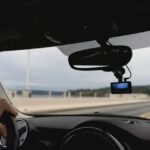
New Study by Solera Shows 67% of Americans Say Video-based Safety Systems Would Improve Fleet Driver Safety
Solera Holdings, LLC, released new research underscoring the importance of safety-based technologies in commercial fleets.
The findings show that despite safety efforts deployed by many fleets, Americans feel greatly impacted by unsafe fleet driving behaviors – and there’s a clear opportunity for technology to play a role in making drivers safer.
“The industry has come a long way in improving driver safety standards, and it’s important that we continue on this journey collectively – especially as there are public perceptions to overcome,” said Michal Yariv VP and GM of Strategic Initiatives at Solera.

Touch-Based Alcohol Detection Can Keep Your Fleet Safe
Create a culture of prevention with touch-based alcohol detection and keep your fleet and your drivers safe.
Fleet Forward Conference Connects Established Industry Players with Newcomers
There’s a lot of convergence happening in the fleet world, and the Fleet Forward Conference puts established industry players together with newcomers to learn from each other in a forum with great content and networking.
Fleet Logistics: Fleets Shouldn’t Risk Delaying Transition to EVs and Mobility Solutions Despite Cost Crisis
Fleet operators should not delay in putting robust plans in place to transition to electric vehicles or consider new mobility solutions, despite a series of unprecedented external factors, such as increasing energy costs and uncertain new vehicle supply due to the global semiconductor shortage.
That’s the view of Samuel Kellner-Steinmetz, the Chief Sales Officer of Fleet Logistics Group, who says that, while it may be tempting to delay plans to go electric or introduce mobility options in such a volatile environment, legislative change means that the clock is steadily ticking.
For example, EU legislation will continue to promote electrification, while air quality standards will get tougher over the next few years, meaning that delay is not an option. The European Commission has just announced a requirement for a 60% Europe-wide cut in particulate matter from light commercial vehicles by 2030 under revisions to its ambient Air Quality Directives.
How to Choose the Best Dash Cam
The best dash cam for safety, security or just recording curiosities that happen on the road will depend on a few key features.
It's hard to choose since there are so many dash cams on the market, most from brands you don't know.
All dash cams have the same core purpose that makes them unique among digital cameras: They record live (not time lapse) video as you drive, running in a continuous loop, the "length" of which varies by the amount of storage in the cam. Every feature beyond that is optional and, often, superfluous.
First, think about your budget: You can spend tens to hundreds of dollars on a dash cam, but start with a rough idea of what your reason for having one is worth. If you want to record evidence of a crash you're involved in, that's easily worth hundreds of dollars; If you just want to capture the occasional YouTube moment, that might warrant spending less than $100.