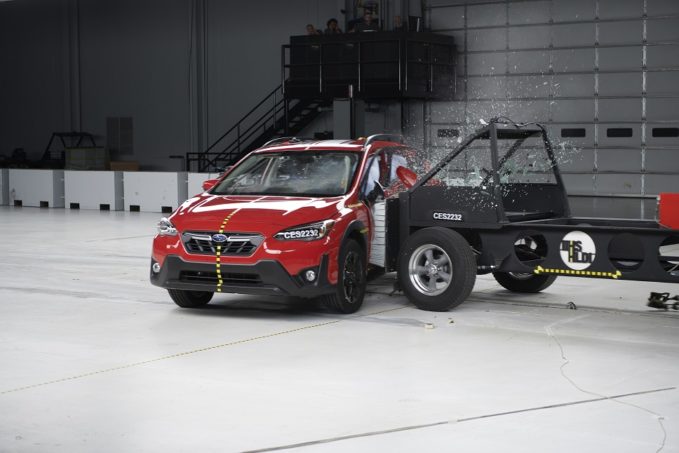
Despite the challenge presented by low ride heights in the Institute’s new, tougher side test, some small cars have cracked the code.
Seven of 11 small cars tested earn good or acceptable ratings in the Insurance Institute for Highway Safety’s new, tougher side-impact test, but four models are rated poor.
The Mazda 3 sedan and Mazda 3 hatchback earn good ratings. Five other vehicles — the Nissan Sentra, Toyota Corolla sedan, Toyota Corolla hatchback, Honda Civic sedan and Honda Civic hatchback — are rated acceptable.
The Kia Forte, Subaru Crosstrek and the Subaru Impreza sedan and wagon are rated poor.
“It’s encouraging to see so many small cars with passing grades in this new side test,” said IIHS Senior Research Engineer Becky Mueller, who spearheaded the development of the evaluation. “Smaller, lower vehicles are at a disadvantage when struck by the new test barrier, which is a more realistic representation of the front end of a typical modern SUV than our old barrier. Clearly, some manufacturers have already figured out how to provide sufficient protection in a crash like this even for occupants of small cars.”
In earlier IIHS tests of small SUVs, midsize SUVs and midsize cars, a higher ride height seemed to translate into better performance in the new evaluation. A taller vehicle means the moving barrier strikes nearer to the floor of the occupant compartment. The results from the small cars suggest that vehicle length — in particular, the length of the occupant compartment — may also play a role.
“Doors tend to be weaker than the B-pillar and the frame surrounding the occupant compartment. Small cars have less of that weaker space because of their shorter wheelbase and occupant compartment,” said Raul Arbelaez, vice president of the Institute’s Vehicle Research Center.
The structure and safety cage of the good-rated Mazda 3 vehicles held up well in the new test, and the head-protecting airbags for both the driver and rear passenger prevented the dummies’ heads from hitting the hard surfaces of the vehicle interior. As a result, there was a low risk of most injury types. However, there was a moderate risk of injuries to the driver’s torso and pelvis.
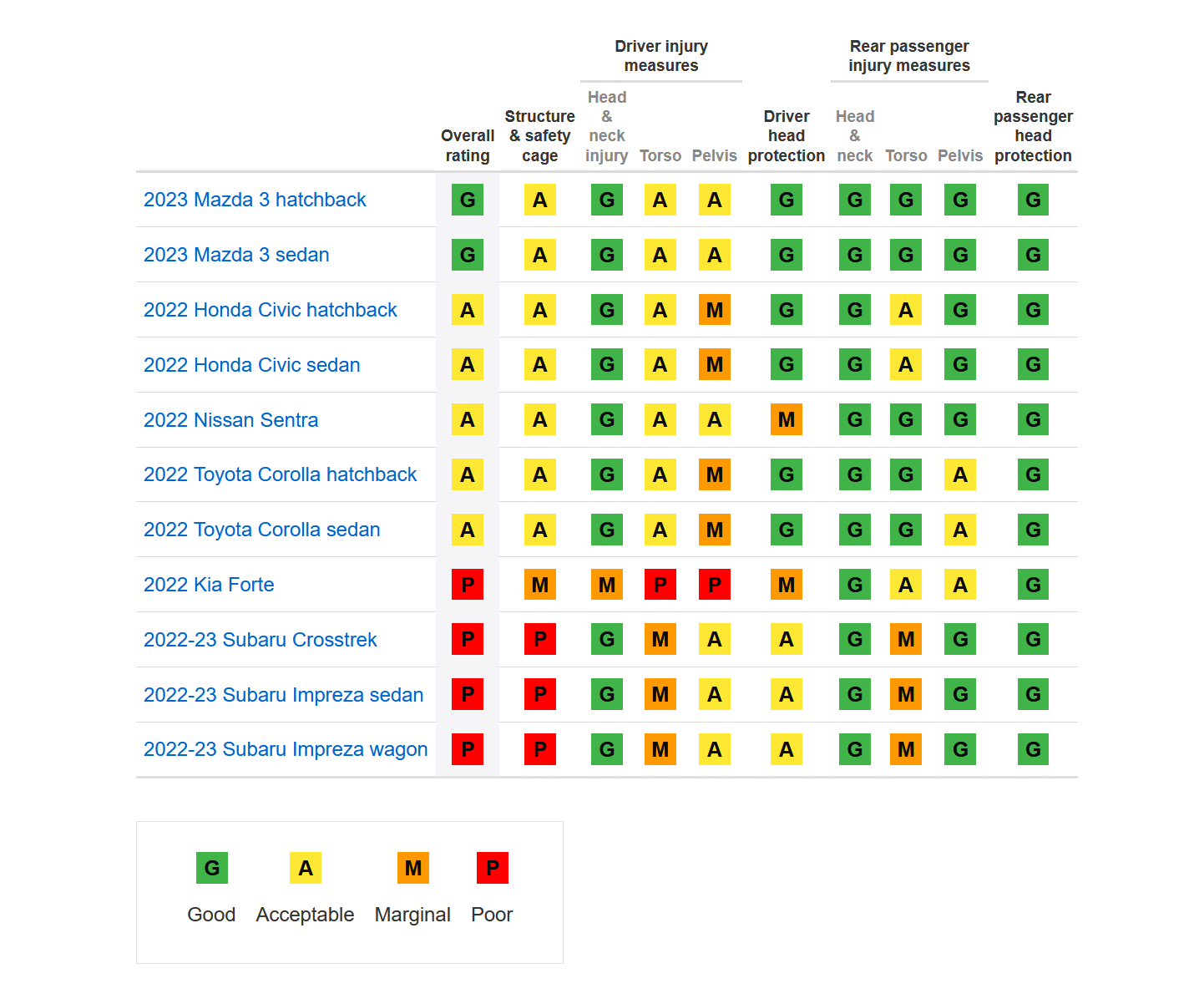 The structure and safety cage also held up reasonably well in all five acceptable-rated vehicles, though the impact of the barrier caused a small amount of intrusion into the occupant compartment. The head-protecting airbags for the driver and rear passenger prevented the dummies’ heads from striking the hard surfaces of the door and windowsill in the Civics and Corollas, helping to minimize the risk of head injuries. In the Sentra, the driver dummy’s head moved downward past the side curtain airbag to hit the windowsill, but the vehicle’s solid performance in other areas prevented that flaw from resulting in a further downgrade in the overall rating.
Injury measurements also indicated a significant risk of injury to the driver’s pelvis in both the Civics and Corollas and a moderate risk of an injury to the driver’s pelvis in the Sentra. The risk of a torso injury was moderate for both the driver and rear passenger in the Civics, while measurements indicated a moderate risk for the driver and a significant risk for the rear passenger in the Civics.
For the poor-rated Forte, measurements taken from the driver dummy indicated a high risk of injuries to the torso and pelvis and a relatively high risk of a head or neck injury. The driver dummy’s head made hard impact with the windowsill through the side curtain airbag, and the structure of the occupant compartment was not maintained well, contributing to a moderate risk of injuries to the rear passenger’s torso and pelvis.
For the poor-rated Crosstrek, whose test also applies to the Impreza sedan and Impreza wagon, there was more substantial intrusion of the B-pillar and interior door panels into the occupant compartment, encroaching on the survival space and contributing to a relatively high risk of torso injuries for the driver and rear passenger. The head of the driver dummy also moved downward past the side curtain airbag to hit the windowsill, indicating inadequate head protection.
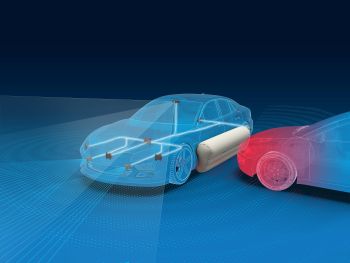 IIHS developed the updated side crash test after research showed that many of the real-world side impacts that still account for nearly a quarter of passenger vehicle occupant fatalities are more severe than the original evaluation.
The updated side crash test uses a heavier barrier traveling at a higher speed to simulate the striking vehicle. The new barrier weighs 4,200 pounds — close to the weight of today’s midsize SUVs — and strikes the test vehicle at 37 mph, compared with a 3,300-pound barrier traveling at 31 mph in the original evaluation.
For now, the updated test is not included in the IIHS award criteria. However, starting in 2023, a good or acceptable rating will be required for the lower-tier TOP SAFETY PICK award and a good rating will be needed for the higher-tier TOP SAFETY PICK+.
All 11 vehicles earn good ratings in the original side test.