The Fleet Poll: Your Opportunity to Ask Tough Questions
How high will gas prices go in 2023? When will the supply chain return to some semblance of normalcy? And what will it take for vehicle availability to finally pick back up?
By Ted Roberts, President, FMW
These days, there are a lot of important questions circling around fleet. Which is exactly why Fleet Management Weekly has teamed up with FLD Remarketing to introduce The Fleet Poll, a bi-weekly poll that will present questions on topics where fleet professionals want deeper insights.
The poll takes less than 30 seconds to answer two multiple choice questions. If you have a topic or question you’d like to know more about - we’d love to have you as a “guest asker” for a future fleet poll.

How Fleet Managers Can Earn Revenue from Their Parked EVs
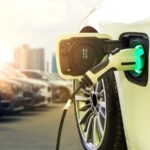
Vehicle-to-everything turns an EV charging system into a revenue center
By Scott Brierley, Director of Automotive and Strategic Partnerships, Fermata Energy
The conversation around EVs is evolving rapidly, giving fleet managers a new way to measure their fleet’s positive impact on their company’s bottom line. What’s the change? EVs are batteries on wheels that enable fleet owners and operators to earn revenue from their local utility while their EVs are parked.
Vehicle-to-everything (V2X) bidirectional charging systems is the technology that makes this possible. This means that EV charging stations for fleet owners and operators are shifting from a cost center to a revenue generator, reducing the cost of acquiring, owning, and operating EVs.
Problems and Solutions: One Fleet Manager’s Experience
There are plenty of problems in the fleet world today, but there are some great creative solutions as well - and having a good FMC on your side can help.
LeasePlan USA and Wheels Donlen Complete Combination to Create Corporate Mobility Solutions Leader
LeasePlan USA and Wheels Donlen announced the completion of their previously announced combination to create a unified fleet management business. Athene Holding Ltd. (“Athene”) served as the lead investor in the transaction and is the majority shareholder of the newly combined company.
Combining LeasePlan USA and Wheels Donlen creates a corporate mobility solutions leader, with greater scale, enhanced investment capacity and differentiated capabilities to better serve clients globally. The combined company, which today manages more than 800,000 vehicles and $7 billion of assets in the US, will be led by CEO Shlomo Crandus. Matt Dyer. previously CEO of LeasePlan USA, will serve as its President and as a board member of the combined company.
The financial and operational strength of the combined company supports an ambitious go-forward strategy to deliver an enhanced suite of client solutions across fleet, last-mile delivery, trucks and equipment, including greater electric vehicle and digital technology integration.
Understanding Customer Experience Leadership
Customer experience leadership is developed with a qualitative and quantitative understanding of all the interactions that a customer has with your fleet business.