WIFM Profile: Linda Banks of Cummins on Career, Continuous Learning and Use of a ‘Sounding Board’
By Fleet Management Weekly Staff
As a fleet professional and member of AFLA and WIFM, FMW asked Linda Banks of Cummins to answer some questions about her career, her experiences in the industry, and her advice to other women in fleet.
"When I first joined WIFM, I had only been in a Fleet role...for about a month. With the help of connecting on calls, asking questions, I was able to perform and eventually shine enough in my role that my role was expanded."

Electric Cars Have a Road Trip Problem, Even for the Secretary of Energy
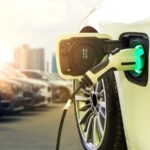
Secretary of Energy Jennifer Granholm knew charging might be a challenge as she set out on a four-day electric-vehicle road trip to highlight the White House investment in electric vehicles.
On a sweltering day in Georgia, an EV driver with a baby in the vehicle, called the police on the US Energy Secretary after her staff blocked a public charger with a gasoline car to “reserve” it for her convoy of EVs. The sheriff’s office couldn’t do anything. It’s not illegal for a non-EV to claim a charging spot in Georgia.
Major takeaway: EVs that aren't Teslas have a road trip problem, and the White House knows it's urgent to solve this issue.
Cox Automotive: August Fleet Sales Strongest in 3 Years
By Dave Bean, FMW Associate Editor
As summer was winding down this year, fleet sales were winding upward, at least according to analysts at Cox Automotive*. August year-over-year sales improved in major fleet segments – some quite remarkably.
Of the Big Three U.S. automakers, General Motors experienced the biggest uptick in fleet sales, trailed by Stellantis. Ford actually experienced a decrease in fleet sales. Overall, the revival of fleet sales continued to outpace the retail sales recovery.
“Although retail sales were weak, fleet sales in the U.S. for August were strong and reached levels for the month not seen since 2019,” said Cox Automotive Senior Economist Charlie Chesbrough.
California Shows That an EV Uprising is Headed for the U.S.
The pace of adoption in California picked up significantly once EVs reached 5% of new-car sales, a threshold at which preferences start to flip for mainstream car buyers. California was one of the first major car markets to reach that tipping point, in 2018, and so far 23 countries have been added to the list.
If California were itself a country, it would now rank fourth in terms of overall EV sales; only China, the US and Germany sell more. The pace of adoption in the state shows no signs of slowing, either, with second-quarter EV sales rising 70% over the same period in 2022. The US as a whole is just three years behind California, and currently tracing its path.
EV Gender Gap Suggests Men Want Novelty, Women Want Value
Results from a 2023 EV sentiment survey conducted by Edmunds explore motivators across male and female respondents surrounding EV car shopping and suggest some of the reasons why this gap exists.
71% of men said they would consider an EV as their next vehicle, while only 34% of women fell in the same camp. Men are more likely to buy an EV for the privilege of being the first to own any newfangled tech. The price and range of an EV is related to other pragmatic issues that women reportedly consider when switching (or not) to fully-electric cars, such as value.