Free NAFA Webinar on Thursday: Preparing for Natural Disasters
Join this informative free Sustainable Fleet Technology Webinar to explore strategies, technologies, and solutions that can help your fleet improve efficiency and advance sustainability initiatives.
Hear firsthand from fleet managers and local agency staff who were directly involved in working in recovery efforts after a natural disaster.
Learn what they had to go through so that your fleet can be better prepared when dealing with the aftermath of a natural disaster such as a major storm.
Motus Highlights IRS Mid-Year Adjustment to 2026 Standard Mileage Rate for Business Use
Motus highlighted the IRS mid-year adjustment to the 2026 standard mileage rate for business use, which increased to 76 cents per mile effective July 1, 2026.
Changing market conditions like this can alter the relationship between reimbursement rates and the actual cost of business driving, requiring an off-cycle rate adjustment.
“Employees who drive for work feel the effects of changing fuel prices every time they fill up their tank,” said Phong Nguyen, CEO of Motus. “Keeping reimbursement rates aligned with current operating expenses helps to ensure that employees are fairly reimbursed and that business-driving costs are accurately reflected.”
The Fleet Lifecycle Begins with Strategy
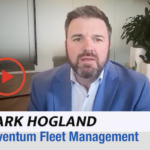
By Mark Hogland, President, Moventum Fleet Management
Organizations that consistently build strong fleet programs don’t simply react. They establish a clear strategy.
At Moventum, we view that as the first stage of the fleet lifecycle: Advise. Every decision that follows is stronger when it’s built on a solid strategic foundation.
When fleet strategy stays connected to business strategy, organizations are better positioned to make informed decisions.
Beyond Right-to-Repair: Why Fleet Managers Should Be Watching H.R. 7389
By Ed Pierce, Fleet Management Weekly
The debate over “Right-to-Repair” has again moved into the spotlight following congressional action on H.R. 7389.
For consumers, the debate has entered on a familiar question: Who should have the right to repair my vehicle?
Fleet operators should view the legislation through a broader business lens. If access to connected-vehicle data becomes increasingly proprietary, fleet operators could face several long-term challenges.
Why Continuous Damage Tracking Is Replacing Periodic Fleet Inspections
By Neeraj Pal, Growth Manager, Inspektlabs
The gap between when damage occurs and when it is recorded has become an expensive problem.
Fleets have already moved from reactive repairs to proactive, predictive maintenance, and condition tracking is the natural next step in that shift.
A periodic inspection treats a condition as a status to check on a set date. Continuous tracking monitors the condition as as it changes over time and records it.