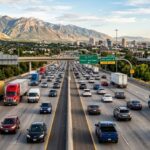
“The City of Traffic Congestion” Takes Title for Sixth Consecutive Year
Los Angeles topped the '10 Worst Congested Cities' list, beating out 1,360 cities in 38 countries around the globe.
The report results were calculated by combining anonymous, real-time global positioning system probe data from 300 million connected cars and devices with real-time traffic flow data and other criteria, such as construction and road closures.
"Traffic congestion doesn't come cheap. INRIX, a leader in transportation analytics and connected car services estimates that such congestion costs U.S. drivers nearly $305 billion in 2017, or $1,445 per driver. Those costs come directly and indirectly from sources like wasted time, fuel and productivity."
Read the article at U.S. News.

How WEX is Capturing Details on “Fueling” for EVs
When it comes to capturing details on “fueling” for electric vehicles, WEX has fleets covered.
Flood Damage: Knowing When it Can or Shouldn’t Be Repaired
By Greg Neuman, CEI Senior Manager of Quality Control
With consumer watchdogs constantly warning about buying used cars that have flood damage, fleet managers may be justifiably skeptical about whether it’s worth repairing one of their own.
At CEI, we’ve successfully managed hundreds of repairs of flood-damaged vehicles, but knowing when it’s possible to return one to completely safe usability is one of the most difficult tasks in the body repair business.
Vehicles are made to withstand a certain amount of exposure to water. It’s deep and prolonged submersion, especially in certain kinds of water, that determines whether repairs are worth the money or you’re better off declaring the vehicle a total loss.
What makes today’s vehicles especially vulnerable to floodwaters are the extent to which they’ve become electronic.
Priceless Fleet Networking Opportunities
One key benefit of NAFA is that it offers powerful networking opportunities to meet other fleet industry people. That can mean great advice when you need it. Maybe even a promotion.
Commuters Could Save Money by Using Ride-Sharing Service to Work
According to a new study by NerdWallet, commuters in eight metropolitan areas (Chicago, Detroit, Los Angeles, Miami and Fort Lauderdale, New York City/Newark, San Diego, San Francisco/Oakland, and Washington, DC) could save anywhere from $6 to $135 weekly by using Uber or a comparable car sharing service instead of driving a personal vehicle.
Insurance and parking are the key factors in driving up the cost of commuting driving 10.4 miles-one way to work, the study revealed. The biggest savings were in New York, San Francisco and Chicago.