NETS Releases Cost of Collision App for Employers
Measure your company’s cost of crashes, both on-the-job and off-the-job with NETS’ new Cost of Collisions Calculator.
Employers are in a unique position to directly influence their employees driving habits – and literally save lives. Those with robust road safety programs understand that whether an employee is involved in a crash when driving on the job or off the job, it still affects the employer. Implementing proactive safety initiatives such as defensive driver training and establishing comprehensive policies surrounding distractions, seat belts and fatigue are just a few measures employers can take to reduce employee risk behind the wheel.
With this data, you’ll be able to make the business case to support investment in employee-wide safe driving programs. They say that knowledge is power. In this case, knowledge can help you to reduce risk and save lives. What could be more powerful than that?
Norway is a Global Leader in the Push to Restrict Vehicle Emissions
As a major oil exporter, it may be surprising to learn that Norway is ahead of the rest of the world with about 52 percent of the new cars sold last year being powered on new forms of fuel.
Norway offers generous incentives that make electric cars cheaper to buy and provides additional benefits once the vehicles are on the road
“I had been wanting an electric car for a long time for environmental reasons, but they were expensive,” said Zanete Anderson Lilley, a senior adviser in Norway at the World Wildlife Fund, an environmental advocacy organization. Lilley eventually bought a Kia Soul, a small five-door electric car, for about $24,600 last summer. “If it wasn’t for the subsidies, I guess most people would still choose fuel,” she added.
Read the article at San Francisco Chronicle.
Mazda Looks Ahead to Driving Safely While Having Fun
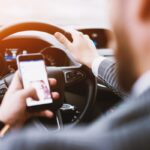
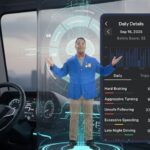
In a newly filed patent, Mazda thinks it has found a better way to end distracted driving and make driving more fun.
Mazda's proposed system can detect when your attention wavers, knows when it's mostly OK to look away, and when it's really not—just might work. Especially if it can convince you—rather than scold you—to draw your eyes back to the road.
"We still believe fully in the idea that the most powerful computer in the car is an attentive driver, and that the journey is as important as the destination," says Mazda rep Jeremy Barnes.
Read the article at Wired.
Long-Range LiDAR Makes Toyota’s New Self-Driving Car ‘See’ 200 Meters All-Around
Toyota’s autonomous research vehicles can now “see” farther in every direction, thanks to four long-range LIDAR sensors manufactured by a Portola Valley, California-based startup called Luminar.
The Lexus LS 600hl test car now has a 200-meter range around a 360-degree perimeter, which Toyota argues makes it “one of the most perceptive automated driving test cars on the road.”
Engineers at Toyota Motor North America Research and Development improved the car’s appearance with a new rooftop weather and temperature proof panel, cleverly using available space in the sunroof compartment to minimize the overall height eliminating the “spinning bucket” LIDAR sensor that has historically characterized autonomous test vehicles.
Read the article at The Verge.
Cold Windshields Meeting Hot Water is a Very Bad Idea
In this cold, snowy and icy winter, you might be tempted to put hot water on your car's ice-coated windshield - don't do it!
When hot water hits cold glass, the glass expands rapidly, but not evenly, causing cracks in windshields and windows. If you do not have an ice scrapper, a good way to de-ice your windshield starts with warming up the car with the vents blasting on defrost.
If your car is frozen shut and none of the doors will open, you can slowly pour warm (not boiling) water to loosen them up. You can even use a hairdryer, if you don’t have any legit de-icing agents laying around. You can prevent your car from freezing shut by rubbing simple cooking spray along the edge of your doors.
Read the article at Jalopnik.